Master Chain
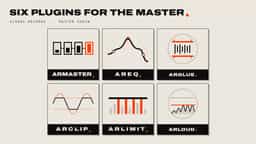
Six plugins for the last stage
€49.99
Match your audio to a target loudness while keeping true peaks below a set ceiling, using precise measurement and transparent gain adjustment.
Loudness matching with true peak limiting
Match your audio to a target loudness while keeping true peaks below a set ceiling, using precise measurement and transparent gain adjustment.
Loudness matching with true peak limiting
Six plugins for the last stage

Every Ajanss Records plugin in one bundle
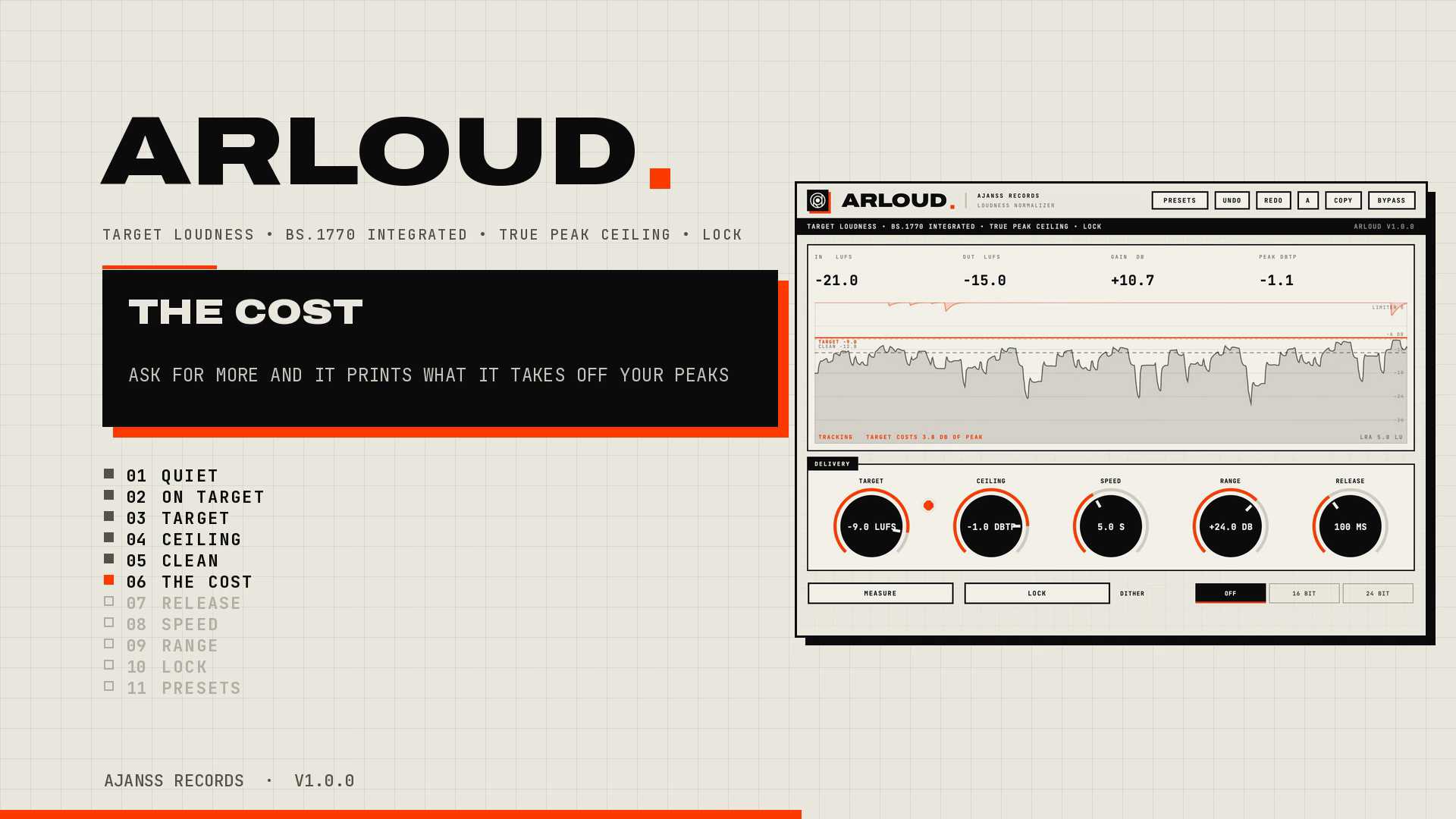
ARLOUD brings a finished programme to a defined delivery loudness while keeping its true peak below the ceiling you choose. It measures incoming audio using ITU-R BS.1770-4 gated integrated loudness, then applies the exact gain required to reach the selected target. A true peak limiter sits at the final stage as a safety mechanism, with simple CEILING and RELEASE controls. Across 36 tested combinations of target, ceiling, release, and source material, the output remained below the specified ceiling, verified independently at 32× oversampling. The CLEAN indicator shows the loudest target that can be reached without limiting. Below that point, ARLOUD applies only a constant gain change. Above it, the display shows how much peak reduction would be required, making the loudness cost of the chosen target clear rather than automatically applying heavier limiting. LOCK freezes the measured gain and saves it with the session for consistent repeat exports. Fourteen delivery presets provide starting targets for streaming services, podcasts, EBU R128, ATSC A/85, and other common standards.
Not enough reviews yet

Meter loudness, peaks, spectrum and stereo

True peak limiter for loud, controlled mixes

Customizable mastering chain for polished mixes

Hear what streaming does to your master.

Professional Zero-Latency Visual Audio Clipper
Precision clipping with transparent control

Reference Your Mix with Confidence

Precision dither for final bit-depth conversion

An essential collection of mix effects
Automatic level riding for smooth, even audio
Not enough reviews yet