Interesting tool, free, offline, no AI slop — just raw stochastic processes dressed in Schoenberg and Hindemith clothes. Refreshing in a weird way. Outputs are rarely usable as-is but occasionally throw up something interesting worth poking at. Needs patience! go in without reading the docs and you'll uninstall it in five minutes.
Stochastic Music Generation for Contemporary Composers. A local, offline compositional engine for testing musical ideas before you commit to notation.
Prototype art music in seconds
SONATUM
Stochastic Music Generation for Contemporary Composers. A local, offline compositional engine for testing musical ideas before you commit to notation.
Prototype art music in seconds
Previews
SONATUM generates art music using explicit theoretical models (Hindemith, Palestrina, Schoenberg, Persichetti) — no corpus training, no style imitation, no cloud inference. You define structure, density, direction, and constraint; SONATUM renders it immediately, with controlled variation. Made for composers working in experimental, research-driven, or art-music contexts who need to hear whether a process sustains interest, whether tension builds correctly, or whether a textural idea scales — before spending hours writing it out by hand. This is not a finished-piece generator. It's a decision surface: prototype fast, iterate by ear, export when the material proves itself. The score editor is minimal by design; once you're thinking about engraving, you've already moved past what SONATUM is for. If you work with structure, process, and intention rather than improvisation or preset loops, and you value speed in the ideation phase, SONATUM will fit your workflow immediately.

What SONATUM offers
What’s new
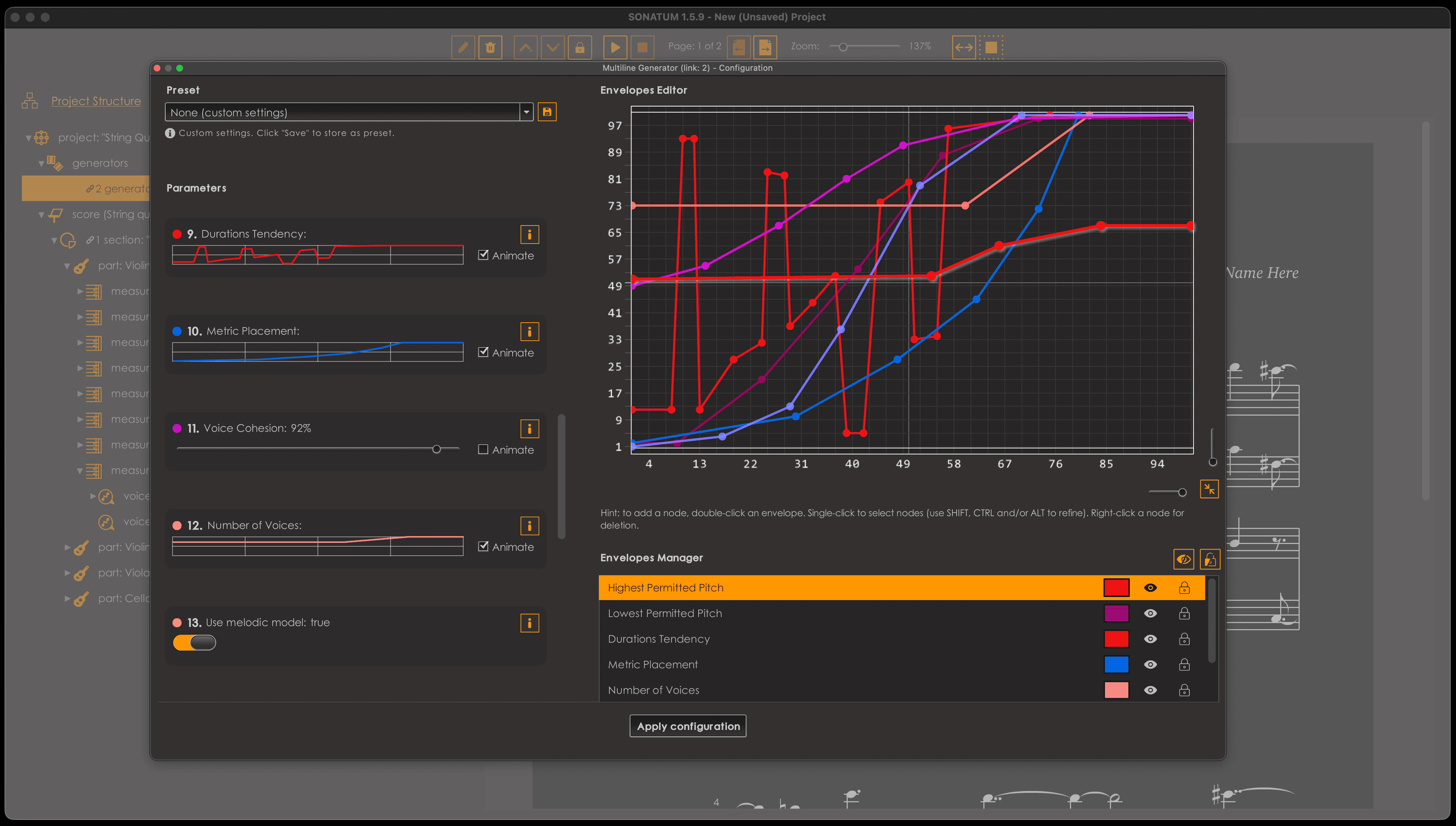
- The Multiline Generator has been rebuilt: 2-3x faster, and markedly more stable.
- Major Features
- Repeatable Generation
- Seeded randomness reproduces a generation exactly, or explores variants you can return to. Two new parameters — Metric Placement and Voice Cohesion — bias how durations sit against the beat, and whether voices read as lines or scattered activity.
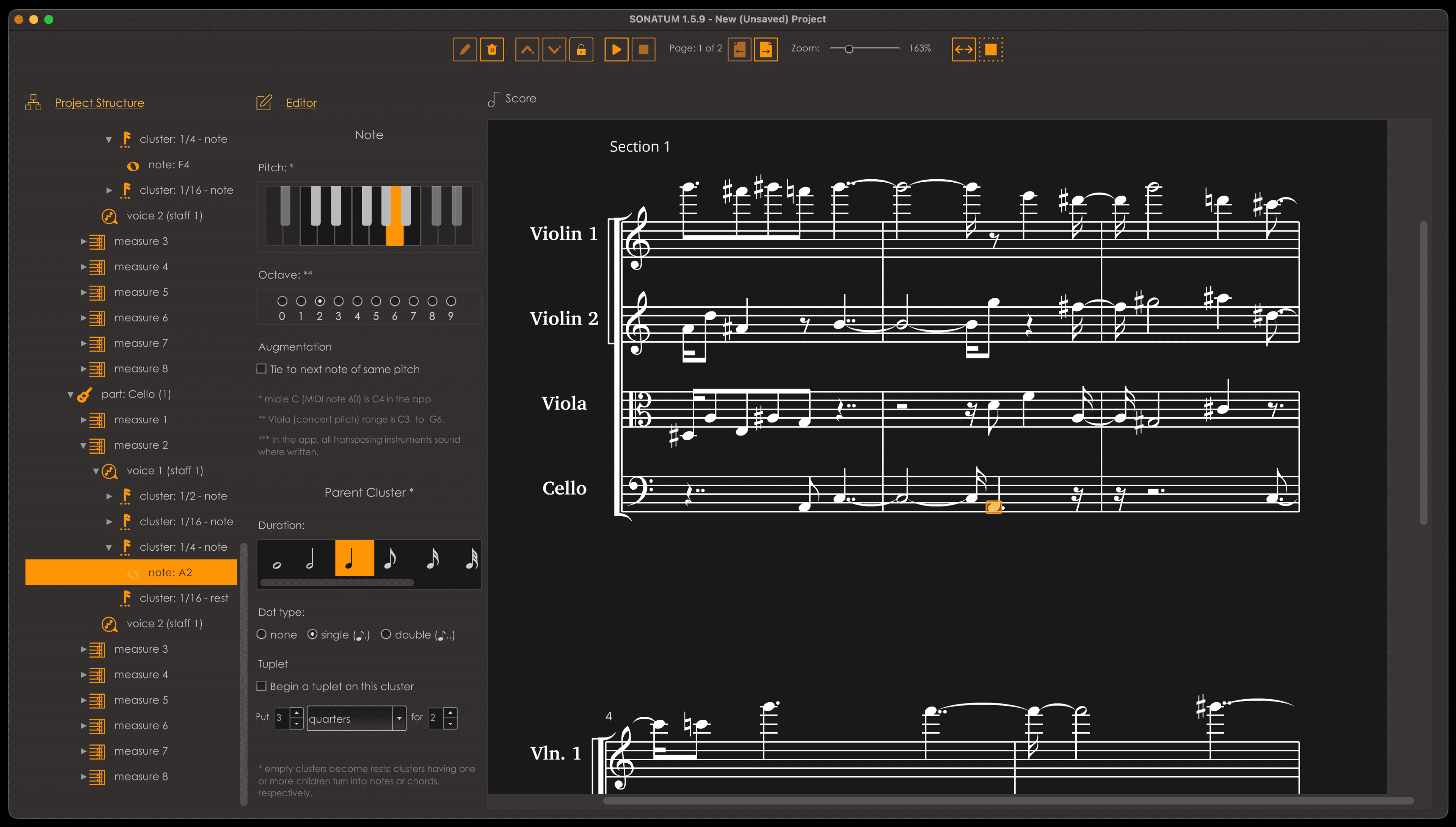
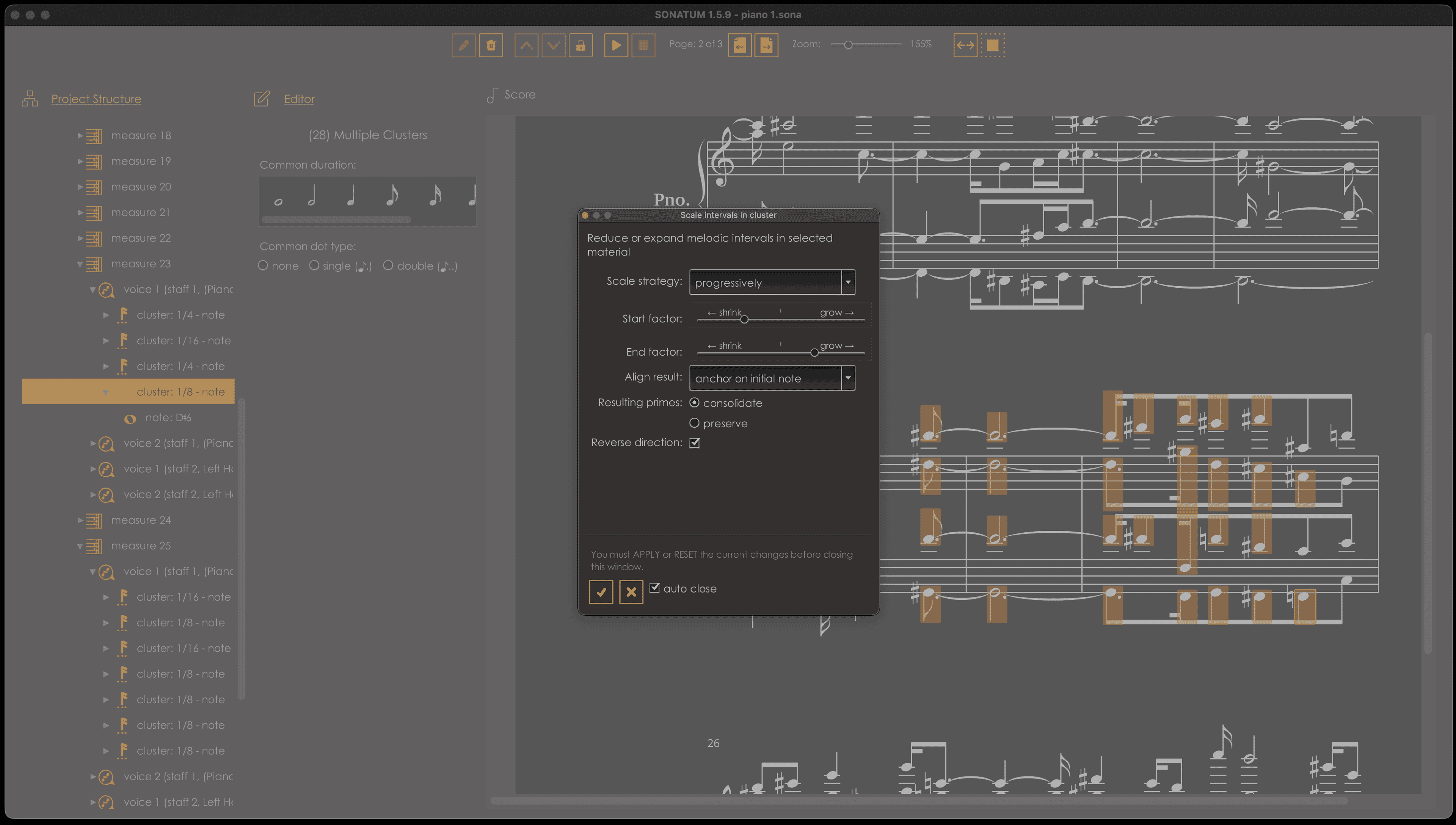
- Faster Editing
- Diatonic transposition joins chromatic. Octave, fifth, third, semitone and duration changes are keystrokes, and the score is navigable from the keyboard.