Best free VST instruments in 2026
Free virtual instruments have closed most of the gap with paid ones. A producer on no budget can now score a whole track with synths, samplers and studio-recorded acoustic instruments that cost nothing. This guide collects the best free VST instruments in 2026, grouped by instrument family (synths, a complete orchestra, choir, pianos and keys, guitars and drums) so you can jump straight to the sound you need and install it in one click.
This is a roundup of free instruments (things that make a sound), not effects. It sorts every pick by family, and it flags the one detail most lists skip: which run as plugins inside your DAW, and which play in free MuseScore Studio via MuseHub.
Free Muse instruments


Top picks at a glance:
- Best free orchestra, choir and keys: the Muse-branded MuseSounds (Muse Strings, Muse Brass, Muse Percussion, Muse Choir, Muse Keys) — studio-recorded, free, and playable in MuseScore Studio via MuseHub.
- Best free synth: Vital (wavetable), with Surge XT close behind.
- Best free sampled acoustic set: Spitfire LABS, or Native Instruments Komplete Start for the widest spread.
- Best free sampler to load your own libraries: Decent Sampler.
- Best free guitars and bass: Muse Guitars Vol. 1 on MuseHub; Ample Bass P Lite for a sampled electric bass.
How we choose: we rank on sound, coverage and how easily you can actually run it, free and paid on merit, not by brand, and we say plainly where each one plays.
What to look for in a free VST instrument
The best free VST instruments include the Muse-branded MuseSounds — a complete, studio-recorded orchestra, choir, keys and guitars, free in MuseScore Studio via MuseHub — plus free synths (Vital, Surge XT), samplers (Decent Sampler) and sampled libraries like Spitfire LABS. Which ones matter depends on the sound you’re after, so start with two questions: what family do you need, and where will you play it?
A VST instrument (VST is Virtual Studio Technology; the instrument version is often called a VSTi) is software that makes a sound: you trigger it from a MIDI keyboard or a piano roll, and it generates the notes. Free ones come in three kinds: synths build tones from oscillators, so they make sounds no real instrument does; samplers play back recordings of real instruments, which is how you get a convincing piano or violin; and sampled libraries are ready-to-play collections of those recordings. If triggering instruments from MIDI is new, our guide to what MIDI is covers the basics first.
The second question decides more than most lists admit: where the instrument runs. Most free instruments here load as a VST3 or AU plugin inside any DAW — Vital, Surge XT, Spitfire LABS and the rest. The Muse-branded MuseSounds work differently, and it’s the strongest free acoustic option here, so it’s worth knowing why: they’re voiced for MuseScore Studio, the free notation and playback app, and you install them in one click through the free MuseHub app. MuseScore Studio then plays your score back with them and exports the result to audio for your project. They aren’t standalone DAW plugins, which is the trade for a full studio-recorded orchestra at no cost.
One thing this page is not: a list of free effects. EQ, reverb and compression shape a sound after it exists; for those, see the best free VST plugins. Everything below makes sound in the first place.
Pianos and keys


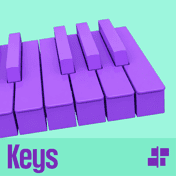
Muse Keys is a free keyboard collection that covers far more than one piano: a pristine Steinway grand, a bright celeste, an Austrian harpsichord, classic electric pianos and retro digital-synth keys, all in one library. That range is the point: instead of hunting a separate free plugin for each keyboard sound, you get the acoustic, electric and vintage-digital palette a score usually needs from a single install. It’s studio-recorded and plays in MuseScore Studio via MuseHub, the fastest route to a good keyboard sound at no cost. For a DAW-native piano you can load as a plugin, Spitfire LABS Soft Piano and the pianos in Komplete Start are the free go-tos; the best piano VSTs goes deeper on that family.
The full orchestra: strings, brass, woodwinds and percussion
This is where free instruments used to fall apart, and where the Muse-branded set changes the picture: strings, brass, woodwinds and percussion, each studio-recorded, each free. Together they’re a complete orchestra — the kind of thing that cost hundreds of dollars a section a few years ago.

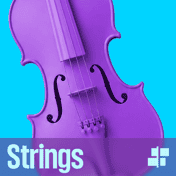
Muse Strings is a free collection of solo and ensemble strings, with both a rich symphonic section and an intimate string quartet, performed by session players and recorded for clear, expressive playback. Strings are the hardest instrument to fake, because the ear knows a real bow instantly, so a free library this detailed is the standout of the set. It plays in MuseScore Studio via MuseHub. Comparing string libraries specifically? See the best orchestral VSTs for the paid options that go further.

Muse Brass covers solo instruments and full ensembles with up to five dynamic layers and true legato, meaning the notes are recorded connecting to each other, so a horn line actually sings rather than sounding like separate hits. That detail is what makes brass read as brass and not a synth patch, and getting it free is unusual. Add the free Muse Woodwinds (17 solo woodwinds) and Muse Percussion below, and the wind and brass sections are complete.

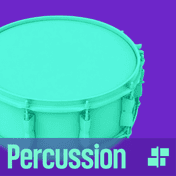
Muse Percussion is a free orchestral percussion toolkit of 28 deeply sampled instruments, from delicate glockenspiel and xylophone up to the boom of taikos and tam-tams. Percussion is what gives a cue its impact and sense of scale, so a set this broad means you’re not faking a cymbal roll with a synth. The one free DAW alternative worth naming is Spitfire BBC Symphony Orchestra Discover, the free entry tier of Spitfire’s BBCSO — a whole orchestra in one plugin, lighter on detail than the full version but genuinely useful.
Choir

Muse Choir is a 40-piece mixed symphonic choir — 10 sopranos, 10 altos, 10 tenors and 10 basses — recorded and edited for automatic playback. Real voices are the sound cinematic and emotional writing leans on, and free choirs are rare and usually thin, which makes this one hard to beat at the price. In a DAW, Spitfire LABS includes a free choir patch that’s good for pads and textures rather than full four-part writing; for the deeper options, see the best choir VSTs.
Harp

Muse Harp is a free concert harp captured with the articulations that make it expressive rather than decorative: plucked sustains, staccatos, bisbigliando (a shimmering tremolo), harmonics and près de la table. Those techniques are what make a harp part sound played instead of programmed, and they’re seldom in a free library. It sits inside the full orchestra above and plays in MuseScore Studio.
Synths
Synths are the biggest free category and the one where free genuinely rivals paid. Vital is the pick most producers reach for first: a wavetable synth (it morphs through a table of waveforms for evolving, modern tones) with a huge drag-and-drop modulation system that matches paid flagships in most real work. Surge XT is a free, open-source hybrid synth with a deep engine and thousands of presets, and the best free all-rounder if you want one synth that does everything. Dexed recreates the Yamaha DX7 and loads its original patches, putting decades of classic FM electric pianos, bells and basses a free download away. And TAL-NoiseMaker is a simple virtual-analog synth, ideal for learning subtractive synthesis and for quick basses and leads. MuseHub carries free synths too; browse the plugins catalog to add them alongside the instruments here.
Samplers and sampled libraries
Two things share the word “sampler.” A sampler is an empty player you load free libraries into: Decent Sampler is the one to get, because a large ecosystem of free instruments is built for it, so one plugin gives you hundreds of free sounds. Sforzando does the same for the older SFZ format. The other kind is a ready-made sampled library you just play: Spitfire LABS is the essential free one, with strings, pianos, choirs, guitars and experimental textures at real recorded quality, the fastest way to add believable acoustic sounds in a DAW. Native Instruments Komplete Start is the widest free bundle, with over 2,000 sounds plus the industry-standard Kontakt Player, which then runs a large catalog of other free Kontakt instruments.
Guitars and bass


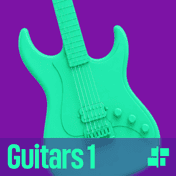
Muse Guitars Vol. 1 is a free library of acoustic, electric and bass guitars built for rock solos, intimate acoustic folk and classic pop parts. Guitar is another instrument the ear catches out quickly, so having recorded acoustic, electric and bass sources in one free install saves a lot of programming. It plays in MuseScore Studio via MuseHub. For a sampled electric bass you can load straight into a DAW, Ample Bass P Lite is a free, convincing Fender Precision that’s enough to write and sketch a bassline.
Drums

Muse Drumline, recorded with The Blue Devils, is a free marching-percussion library of bass drums, snares, tenors and cymbals, with multiple drum and mallet choices, captured in a pro studio for a realistic, thunderous sound. Muse Percussion above covers orchestral hits and mallets; Muse Drumline adds the marching-battery sound that’s almost impossible to find free elsewhere. For a full drum-kit sound in a DAW, IK MODO Drum Free and Steven Slate Drums Free both give you a playable free kit.
Best free instruments overall
For the single biggest jump in sound at no cost, it’s the free Muse-branded set — Muse Strings, Muse Brass, Muse Woodwinds, Muse Percussion, Muse Choir, Muse Keys, Muse Harp and Muse Guitars Vol. 1: a complete studio-recorded orchestra plus keys and guitars, the kind of scoring toolkit that used to cost hundreds, free and one-click through MuseHub. “Free” here means price, not quality. The honest catch, again: they play in MuseScore Studio, so reach for them when you’re happy to write your parts there and export the audio. If you need instruments in your DAW right now, Vital, Surge XT, Spitfire LABS and Komplete Start are the free core.
When you outgrow the free tier, MuseHub is also where the premium partner libraries live: Orchestral Tools (the Berlin series), Cinesamples (the Cine series), Vienna Symphonic Library and Spitfire titles, all for MuseScore Studio, if you want deeper detail in one section. Browse them on the MuseSounds catalog.
How to choose
Start from the family you’re missing, then check where it needs to play. For acoustic and orchestral sound (strings, brass, choir, keys, guitars), the free MuseSounds set is the most complete option, as long as MuseScore Studio fits your workflow. For synths and electronic sound, Vital and Surge XT are all most producers ever need, right inside the DAW. To load your own free libraries, get Decent Sampler. And if you need believable acoustic instruments inside your DAW, Spitfire LABS and Komplete Start are the answer. Most people end up with a couple of synths plus one sampled set, and add the free orchestra when a track calls for it.
Comparison table
Every instrument below is free. The column that decides the most is where it runs.
| Instrument | Type | Runs in | Best for |
|---|---|---|---|
| Muse Keys | Sampled keys library | MuseScore Studio (via MuseHub) | Free piano, celeste, harpsichord and electric keys in one |
| Muse Strings | Sampled strings library | MuseScore Studio (via MuseHub) | The most convincing free strings |
| Muse Brass | Sampled brass library | MuseScore Studio (via MuseHub) | Free legato brass sections |
| Muse Percussion | Sampled percussion library | MuseScore Studio (via MuseHub) | Free orchestral percussion and impact |
| Muse Choir | Sampled choir (40 voices) | MuseScore Studio (via MuseHub) | Free four-part choral writing |
| Muse Harp | Sampled harp library | MuseScore Studio (via MuseHub) | Free, expressive orchestral harp |
| Muse Guitars Vol. 1 | Sampled guitars library | MuseScore Studio (via MuseHub) | Free acoustic, electric and bass guitar |
| Muse Drumline | Sampled marching percussion | MuseScore Studio (via MuseHub) | Free marching drumline |
| Vital | Wavetable synth | Any DAW (VST3/AU) | Modern, evolving synth sounds |
| Surge XT | Hybrid synth (open-source) | Any DAW (VST3/AU) | One free synth that does everything |
| Dexed | FM synth (DX7) | Any DAW (VST3/AU) | Classic FM keys, bells and bass |
| Decent Sampler | Sampler / player | Any DAW (VST3/AU) | Loading hundreds of free libraries |
| Spitfire LABS | Sampled instrument library | Any DAW (VST3/AU) | Believable free acoustics in a DAW |
| NI Komplete Start | Free instrument bundle | Any DAW (VST3/AU) | The widest free starter collection |
| Ample Bass P Lite | Sampled bass | Any DAW (VST3/AU) | A free electric bass to sketch parts |
FAQ
What is a VST instrument? A VST instrument (VST stands for Virtual Studio Technology; the instrument version is called a VSTi) is software that produces sound. You trigger it from a MIDI keyboard or your DAW’s piano roll and it generates the notes, either synthesizing them from scratch or playing back recordings of a real instrument. Effects, by contrast, only reshape sound that already exists.
Are free VST instruments as good as paid ones? For most work, yes. Free synths like Vital rival paid flagships, and free libraries like Spitfire LABS and the studio-recorded MuseSounds are genuinely professional. Paid libraries pull ahead mainly in depth (more articulations, more microphone options, larger recorded ranges), which matters most for detailed orchestral scoring, not for finishing a typical track.
Do free VST instruments work in any DAW? Most do: Vital, Surge XT, Decent Sampler, Spitfire LABS and Komplete Start all load as VST3 or AU plugins in any modern DAW. The main exception here is the MuseSounds set, which plays in MuseScore Studio (installed free via MuseHub) rather than as a DAW plugin; you write your parts there and export the audio.
What’s the best free VST instrument for a beginner? For synths, start with Vital, which has more free tutorials than any other synth. For acoustic and orchestral sound, the free MuseSounds set gives you the most usable instruments for nothing. Between them you can cover almost any track without spending anything.
Where do I get free effects, not instruments? This page is instruments only. For free EQ, reverb, compression and other processors, see our roundup of the best free VST plugins.
Next steps
Muse Guitars Vol. 1 and the other free Muse libraries are set up in how to use MuseSounds in MuseScore Studio. If the free guitars leave you wanting mandolin, banjo or pedal steel, the paid Muse Guitars Vol. 2 adds them.
- Need free processors too? Read the best free VST plugins for effects.
- Building an orchestra? See the best orchestral VSTs and the best piano VSTs.
- Wondering why the free Muse libraries only run in MuseScore Studio? What are MuseSounds? answers that, and what you get for nothing.
- New to playing instruments from MIDI? Start with what MIDI is.
- Browse the free Muse-branded libraries on the MuseSounds catalog.
The whole free Muse orchestra (Strings, Brass, Woodwinds, Percussion, Choir, Keys, Harp and Guitars) installs in one click, and MuseHub itself is free. Download MuseHub free and start scoring with studio-recorded instruments today.