The best AI singing voice generator for a producer who works in a DAW is ACE Studio. It offers more than 80 AI vocalists, converts your own demo vocal into one of them and supports custom voices. Auribus and VocalNet cover swapping and transforming a vocal you have already recorded, and six tools outside MuseHub fill out the list.
AI makes a singing voice in two ways. A generator sings a melody and lyrics you write. A converter takes a vocal you recorded and re-sings it in another voice. Most producers end up using both, so this list covers each and says which is which.
AI singing and voice tools on MuseHub



Top picks at a glance:
- Best overall for producers: ACE Studio, a generator and demo converter with 80+ AI vocalists.
- Best for licensed voices: Auribus, a swap with voices from compensated singers.
- Best for transforming your own voice live: VocalNet, with morphing between up to three voice models.
- Best for detailed control outside MuseHub: Synthesizer V.
- Best for a full song from an idea: Suno.
How we choose: we rank on how realistic and controllable the singing is, how clear the licensing is and how well the tool fits a music workflow. MuseHub picks and outside picks are judged on the same terms.
Generate or convert
A generator needs notes and words. You write a melody and lyrics, choose a voice, and the tool sings them. That suits demos, toplines and songs with no singer on hand. A converter needs a recording. You sing or speak a guide take, and the tool keeps your timing and delivery while changing whose voice it sounds like. That suits swapping a scratch vocal for a finished one, or hearing a part in a different register.
Three things separate the good tools from the rest. Realism comes from how natural the phrasing and breaths sound. Control is how much you can shape a line, such as pitch, timing and tone. Licensing is whether you can release the result. Copying a named artist’s voice without permission is a legal and ethical problem, so prefer tools that license their voices. This is not legal advice, so read each tool’s terms before you publish.
The 9 best AI singing voice generators
1. ACE Studio

ACE Studio is an AI singing voice app with more than 80 AI vocalists. You write a melody and lyrics and pick a singer to perform them, then shape the result line by line. It also converts your own demo vocal into one of those voices and supports custom voices, so it works as a generator and a converter in one. It sits beside your DAW as an app rather than inside it as a plugin. That makes it a songwriting tool first, since you hear a topline sung before you book a session. Read the ACE Studio developer spotlight for the story behind it.
2. Auribus

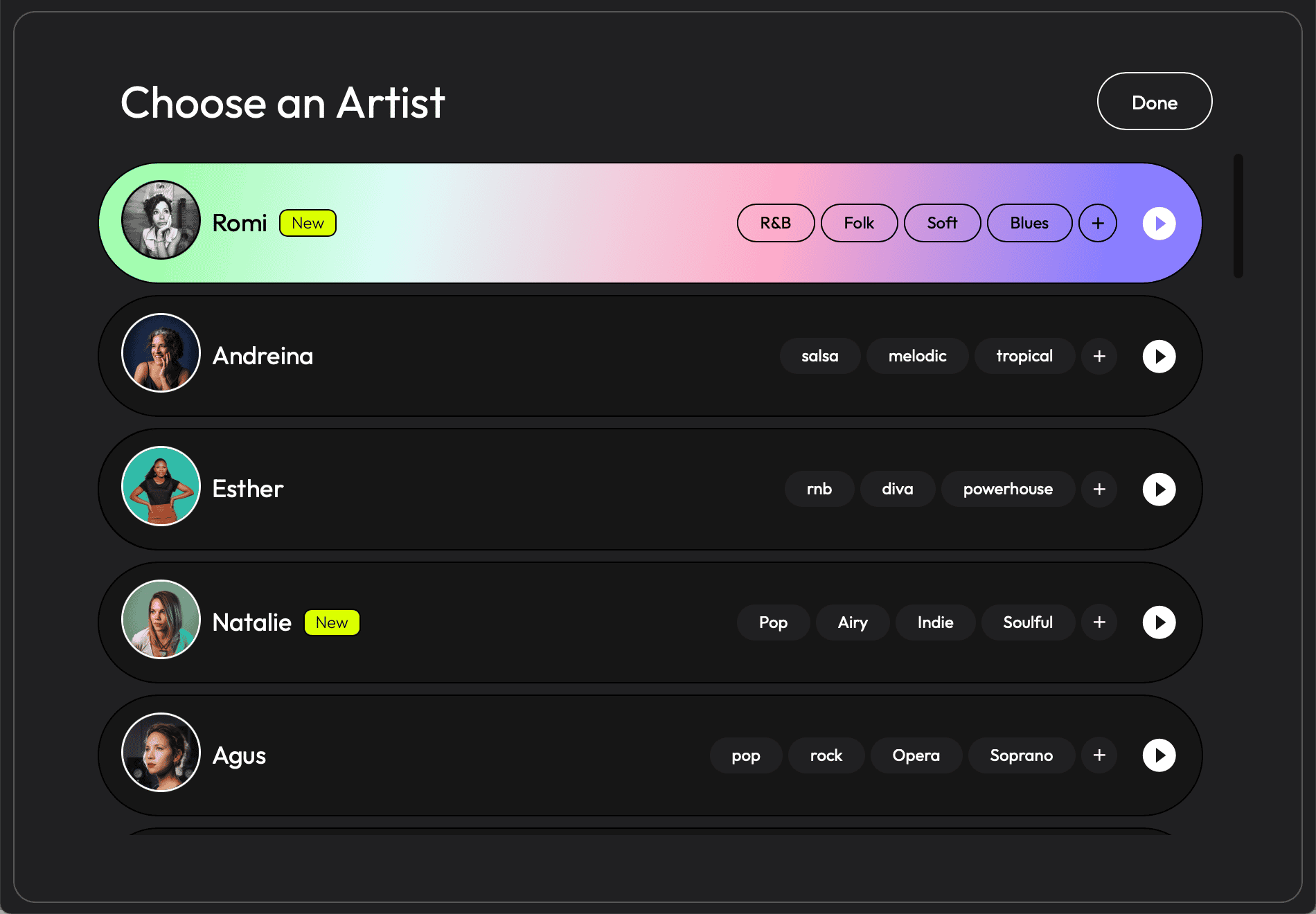
Auribus is a converter that runs inside your DAW as a plugin in VST, AU and AAX formats. Drag your track in, preview it with AI vocalists before committing to a conversion, and adjust pitch, prosody, tone and accent. Its voices come from real singers who are licensed and fairly compensated, and the voices are commercially licensed. That clarity is its main strength next to tools that let you clone anyone. Use it to replace a scratch vocal with a voice you can plan to release. The screenshot shows the artist list with one voice selected.
3. VocalNet

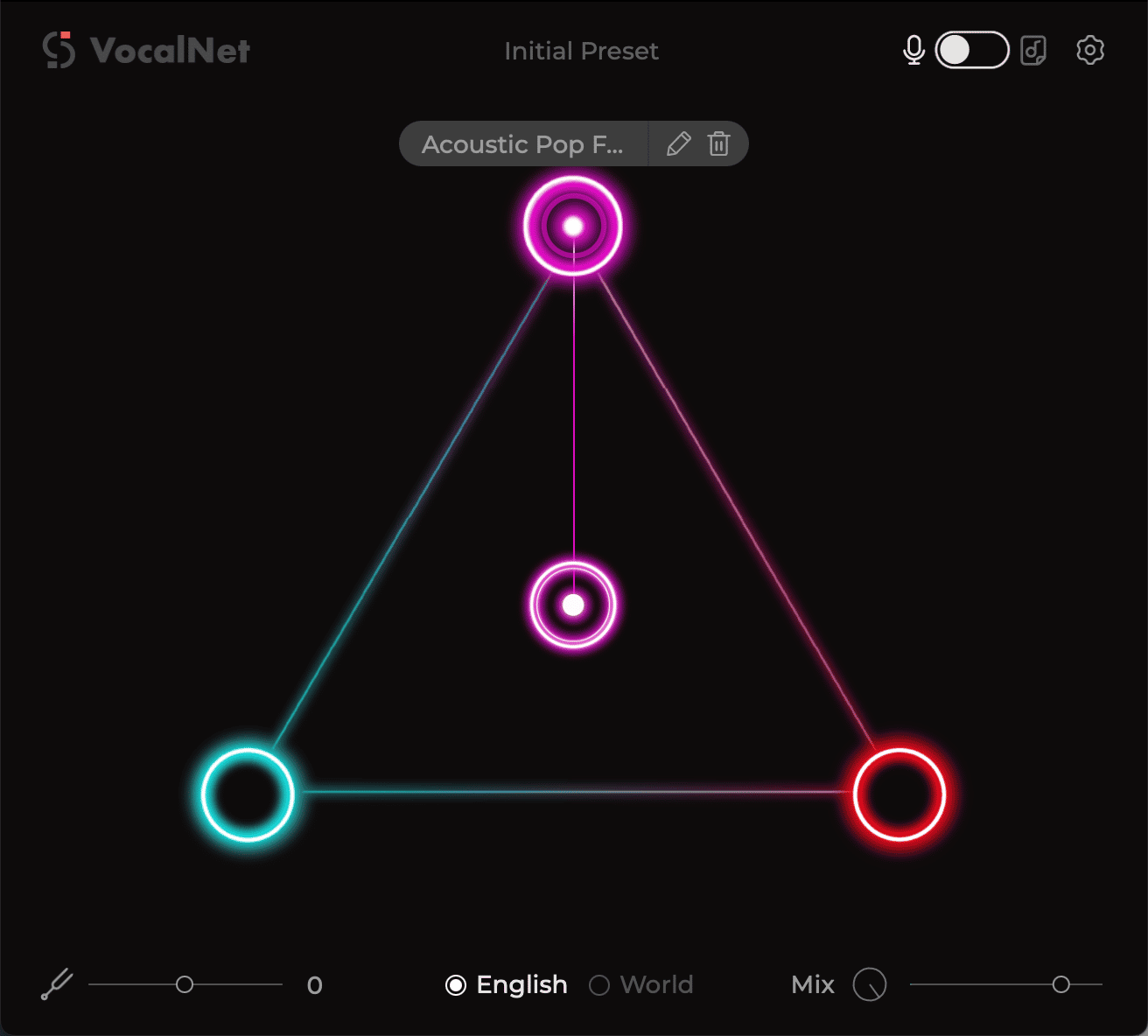
VocalNet is a real-time voice cloning and transformation plugin from Session Loops for macOS and Windows. It converts a vocal as it plays and builds voice models from clean input samples. You can load up to three voice models and drag a cursor to blend them into a new tone, which is useful for building harmonies and backing parts from one lead take. It works best on voices you have the right to use, such as your own. The screenshot shows the plugin with a voice model loaded.
4. Synthesizer V
Synthesizer V, from Dreamtonics, is a professional singing voice synthesizer. You enter the notes and lyrics and a voice sings them, with detailed control over each phrase. Reviewers note that the interface can feel dense to a first-time user, which is the price of that control. It is the right choice when you want to edit a vocal performance the way you edit a MIDI part. If you want something faster, ACE Studio is the gentler start.
5. Vocaloid
Vocaloid is Yamaha’s singing voice synthesis software and the name most people connect with virtual singers. It has a large library of virtual singers and customizable parameters for shaping each performance. Vocaloid suits producers who like working with a named virtual voice and tweaking it note by note. It rewards patience, and it has a long history behind it, so there is plenty of material to learn from.
6. Kits AI
Kits AI is a web platform for creators with singing voices, voice conversion and text-to-singing. Some of its artist voices come from a partner artist community, and a commercial release that uses one needs the original artist’s agreement. It is a good place to try a voice before committing to software, and it works for both generating and converting.
7. Audimee
Audimee is an online AI singing voice generator. You upload or record audio, choose from royalty-free voices and styles, and can mix two voices into a new one. It runs in the browser, so there is nothing to install, which makes it a quick test for a melody or a harmony idea.
8. Controlla Voice
Controlla Voice is a web-based AI singing voice generator that you can start for free, with paid plans for more use. It is built for creators who want to turn a rough recording into a sung vocal without learning a synthesis editor. Treat it as a fast sketching tool and check the current plan limits before you plan a release around it.
9. Suno
Suno is a song generator rather than a voice plugin. It writes and sings a whole song from an idea, and on its paid plans a Voices feature can sing in your own voice. That is fast and fun, and it gives you less control over the melody and the arrangement than the tools above. Use it to spark ideas, then move the keepers into a tool where you control each note.
Which one to choose
If you want a sung topline or demo without a singer, choose ACE Studio. If you want a swapped vocal you can release, choose Auribus. If you want to reshape your own voice in the session, choose VocalNet. If you want to edit every phrase like a MIDI part, choose Synthesizer V or Vocaloid. If you only want to hear an idea, try Audimee, Kits AI or Suno first. Whatever you choose, an AI vocal still needs mixing. A clean EQ, a de-esser and some compression make it sit in the song, and mixing vocals covers that chain.
Comparison table
| Pick | Type | Price | Best for |
|---|---|---|---|
| ACE Studio | Generator and demo converter, app | Paid | Toplines and demos without a singer |
| Auribus | Converter, plugin | Subscription | Licensed voices for release |
| VocalNet | Real-time converter, plugin | Paid | Transforming and morphing your own voice |
| Synthesizer V | Singing synthesizer | Paid | Detailed control of every phrase |
| Vocaloid | Singing synthesizer | Paid | Working with a named virtual voice |
| Kits AI | Web platform | Free and paid | Trying voices without installing |
| Audimee | Web tool | Free to start | Quick melody and harmony tests |
| Controlla Voice | Web tool | Free to start, paid plans | Turning a rough recording into a sung vocal |
| Suno | Song generator | Free and paid | Whole-song ideas |
FAQ
Next steps
- See the wider field in the best AI plugins.
- Mixing the result? Mixing vocals covers the chain from EQ to compression.
- Looking for AI help beyond voices? Read the best AI tools for musicians.
- Browse more in the MuseHub apps catalog.
Get ACE Studio, Auribus and VocalNet in one place. Download MuseHub free and try them on your own songs.