
Overtune Studio
Create music. Record vocals. Own everything.

Stochastic Music Generation for Contemporary Composers. A local, offline compositional engine for testing musical ideas before you commit to notation.
Prototype art music in seconds
Stochastic Music Generation for Contemporary Composers. A local, offline compositional engine for testing musical ideas before you commit to notation.
Prototype art music in seconds
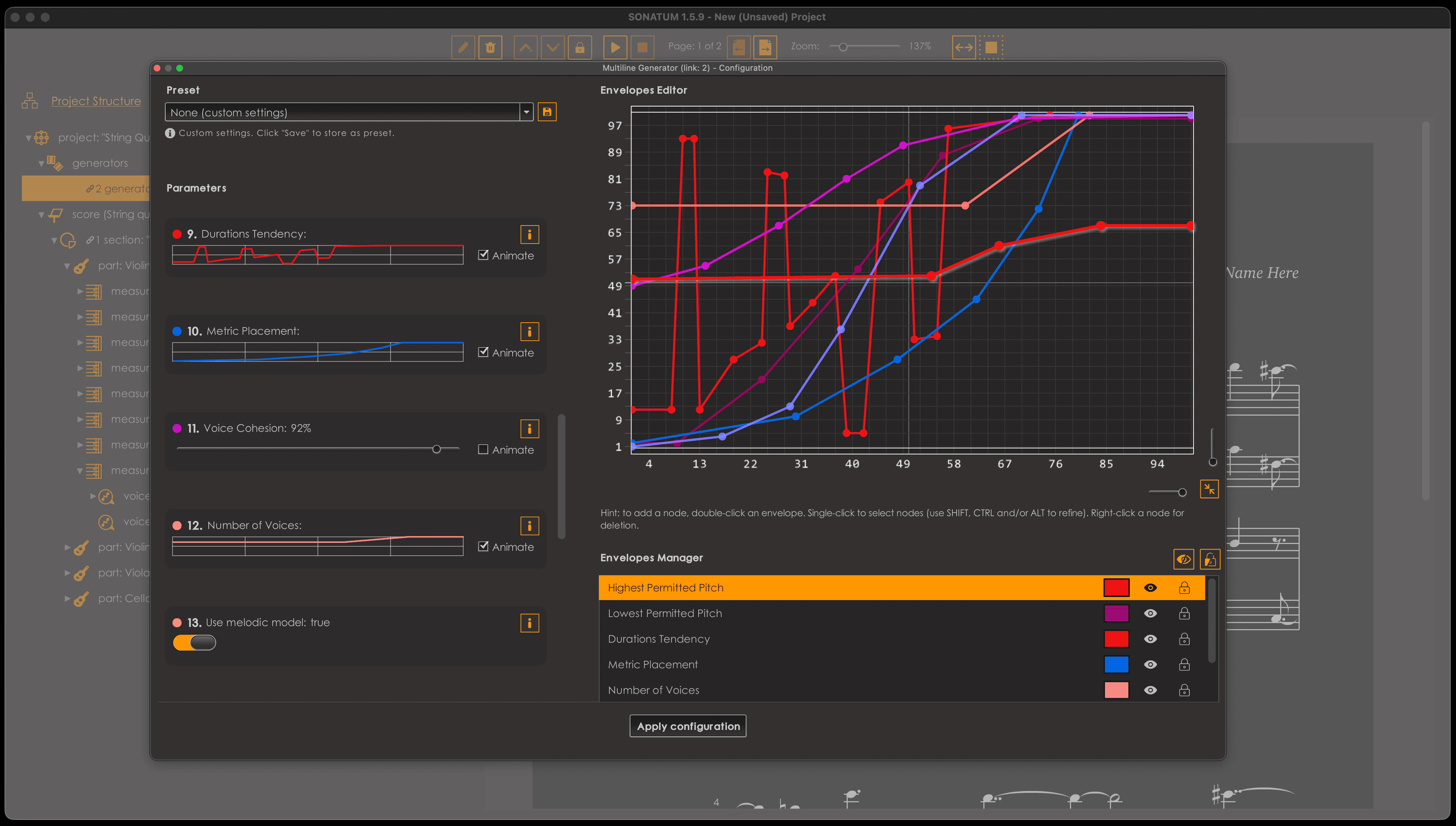
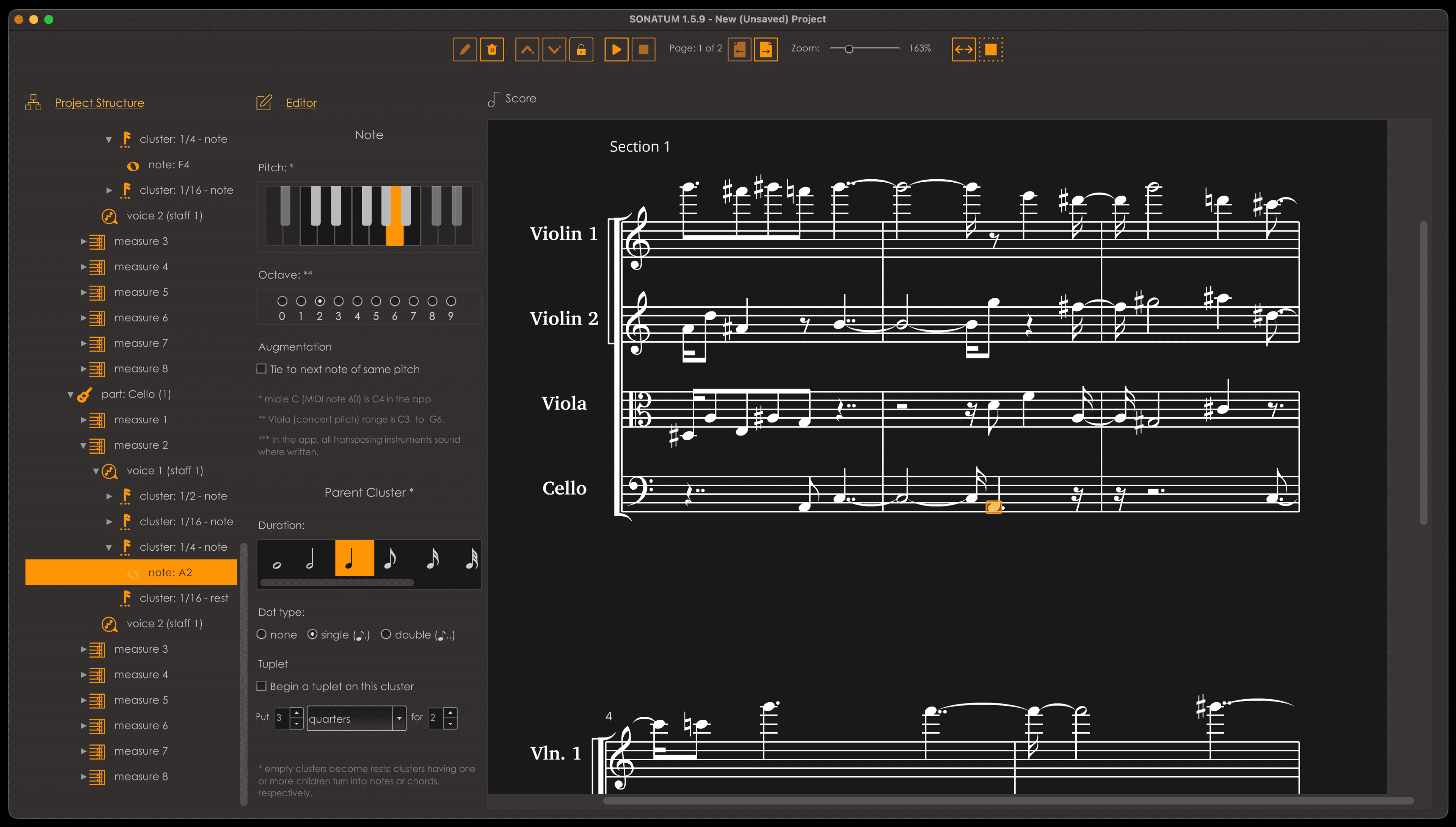
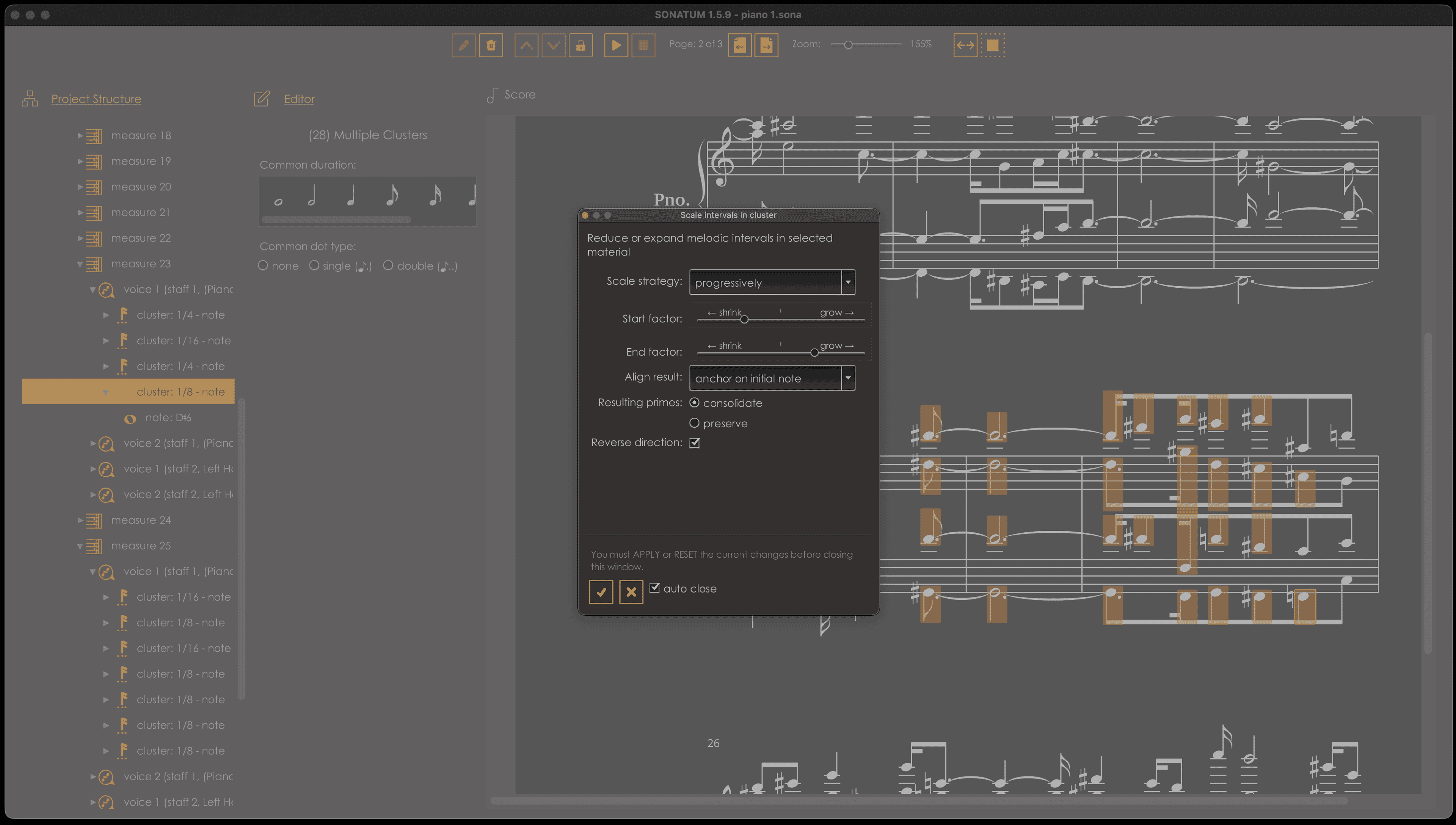
SONATUM generates art music using explicit theoretical models (Hindemith, Palestrina, Schoenberg, Persichetti) — no corpus training, no style imitation, no cloud inference. You define structure, density, direction, and constraint; SONATUM renders it immediately, with controlled variation. Made for composers working in experimental, research-driven, or art-music contexts who need to hear whether a process sustains interest, whether tension builds correctly, or whether a textural idea scales — before spending hours writing it out by hand. This is not a finished-piece generator. It's a decision surface: prototype fast, iterate by ear, export when the material proves itself. The score editor is minimal by design; once you're thinking about engraving, you've already moved past what SONATUM is for. If you work with structure, process, and intention rather than improvisation or preset loops, and you value speed in the ideation phase, SONATUM will fit your workflow immediately.
Create music. Record vocals. Own everything.

Turn Any Sound Into Atmosphere

Turn your recordings into sheet music and MIDI!

The world's most accurate sheet music scanner.

Offline Audio Analysis Tool for Music Creators
A 3D Sonic Sculptor

Create limitless AI vocals.
Visual Sound Design Studio

All-in-One Video Platform for Music Lessons Online

Turn your piano recordings into sheet music!