What is mastering in music?
Mastering is the final stage of music production, applied to the finished stereo mix, that balances tone and loudness so a track translates well on every playback system — from phone speakers to club systems — and sits consistently alongside the other songs on a release.
It is the least visible stage and the most misunderstood. Mastering is not a magic polish, it is not “making it loud”, and it cannot rescue a mix that isn’t working. What it does do is make a good mix hold up everywhere.
Mastering tools on MuseHub

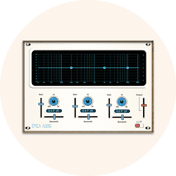
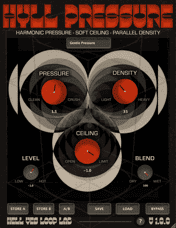
In short:
- When: after mixing, before release. The last thing that happens.
- What it works on: one finished stereo file, not the individual tracks.
- The goal: translation across systems, appropriate loudness, consistency across a release.
- What it can’t do: fix a mix. Balance problems go back to the mix.
How we choose: we explain the stage before recommending anything, and we state the price of every tool we name.
Where mastering sits
Music production runs roughly in three stages, and they are easiest to understand by what each one receives.
Recording produces individual tracks — a vocal, a bass, twelve drum microphones.
Mixing takes all of those and balances them into one stereo file. Levels, panning, EQ, compression, effects. The output is the mix: one file, two channels, the song as it will be heard.
Mastering takes that single stereo file and prepares it for release. It is the final step in audio post-production and the last process music goes through before it goes out commercially.
The critical detail is that a mastering engineer works on the whole thing at once. They cannot turn the vocal up, because there is no separate vocal any more — there is one file in which the vocal is already baked in at a fixed level. Everything they do affects everything simultaneously. That constraint explains both what mastering is good at and what it cannot do.
What mastering is actually for
Translation across playback systems
This is the heart of it. Your mix might sound excellent on your headphones and thin in a car, boomy on a laptop, weightless on a phone. A master is the pass that makes a track sound as good as possible across the widest possible range of playback devices — a phone speaker at one end, a festival sound system at the other.
A mastering engineer works in a room and on monitoring they know intimately, precisely so they can hear the problems that only show up somewhere else. Most of the work is small, broad tonal corrections that keep the track recognisably itself in every context.
Appropriate loudness
Mastering sets the final level. This gets reduced in popular explanations to “making it loud”, which is both true and misleading: raising level is easy, and raising it without flattening the life out of the track is the skill.
Consistency across a release
If a track belongs to an EP or an album, part of the master’s job is uniformity from one song to the next — no volume jumps, no drastic shifts in tone between tracks. The listener should be able to play the record start to finish without reaching for the volume, and without one song sounding like it was made somewhere else.
Mixing cannot do this, because each song is mixed on its own. It is a job that only exists at the release level, and it is the clearest example of mastering being genuinely a different discipline rather than “more mixing”.
A final quality check
Mastering is the last chance to catch problems: clicks and pops, a stray noise in a fade, an inconsistent ending. Part of the work is simply careful listening by someone who has not heard the song four hundred times.
Mixing vs mastering
| Mixing | Mastering | |
|---|---|---|
| Works on | Every individual track | One finished stereo file |
| Can change | Any element independently | Only the whole thing at once |
| Goal | Balance the parts into a song | Make the song translate and sit in a release |
| Typical moves | Level, pan, EQ, compression, effects | Broad EQ, gentle compression, limiting |
| Scale of changes | Large and creative | Small and corrective |
| Output | The mix | The master, ready for distribution |
The pattern to take away: mixing is about the relationship between parts, mastering is about the relationship between your song and everything else — other playback systems, other tracks on the record, other music your listener hears that day.
For the other half of this pair, see how to mix music yourself.
What a mastering engineer changes
The processing involved is a short list, applied conservatively.
Equalisation — broad, gentle tonal corrections. Where a mix engineer might cut a narrow resonance on a single snare, a mastering EQ move is usually a fraction of a decibel across a wide range: a touch less low-mid, a little air at the top. Small moves, because they hit everything at once. See principles of equalization.
Compression — used lightly, to glue the mix and even out sections. Where a mixing compressor shapes a performance, a mastering compressor typically applies a decibel or two of gain reduction. See how to use a compressor.
Saturation — subtle harmonic colour, adding density and perceived warmth. See what is saturation.
Stereo enhancement — adjusting width, and checking the track still works in mono.
Limiting — the final ceiling and the loudness stage. See what is a limiter.
Audio restoration — cleaning up clicks, pops and other small blemishes.
Level adjustment and sequencing — setting the final level and, on a release, the gaps and consistency between tracks.
Notice how much of that list is qualified with “gentle”, “subtle” or “light”. Aggressive mastering is usually a sign that something upstream needs fixing.
What mastering cannot fix
Worth being blunt about, because the belief that mastering fixes things costs people time and money.
A bad balance. If the vocal is too quiet against the guitars, that is fixed in the mix. A mastering engineer can raise the frequency range the vocal occupies, but that raises everything else in that range too.
Muddiness from arrangement. If four instruments are all playing in the same register, no amount of EQ across the whole mix separates them. That is an arrangement decision.
Bad recordings. Distortion, clipping, room reverb baked into a source track: all present in the stereo file, all unfixable there.
A song that isn’t finished. The oldest truth in the studio. Mastering makes a good record sound its best. It does not make an unfinished one good.
If you are considering mastering as a rescue, the honest answer is almost always to go back to the mix.
Your options
Do it yourself. Entirely viable, and the plugins are cheap or free. The real obstacles are your room and your ears rather than your tools — you have heard the song too many times to judge it freshly. How to master a song walks through the process step by step.
Hire a mastering engineer. You are buying fresh ears, a treated room and monitoring you probably don’t own, plus experience of how choices translate. For a commercial release this is still the standard for good reason.
Use an automated service. Algorithmic mastering has improved a lot and is fast and inexpensive. It analyses your file and applies a chain. It cannot ask what you were going for, and it will happily master a mix that needed a fix instead.
A reasonable position for most people releasing independently: master your own demos and works-in-progress to learn what the stage does, and consider an engineer for a release that matters.
Tools
If you are doing it yourself, the chain needs an EQ, a compressor, a limiter and a meter. Prices as they stand:

HYLL Pressure — a free limiter, enough to start with.

Aesthe by Cloudy Samples — $9.99.

Trinity EQ by Épica Audio — $49.99.
The wider field is in the best mastering plugins and the best limiter plugins.
FAQ
Is mastering necessary? For a commercial release, effectively yes — an unmastered track will sound quieter and less consistent beside everything else. For a demo or a rough share, no.
What is the difference between mixing and mastering? Mixing balances the individual tracks into a stereo file. Mastering takes that finished file and prepares it for release. See the table above.
Can I master my own music? Yes, and the tools are affordable. The hard parts are your listening environment and your familiarity with the song, not the plugins.
Does mastering fix a bad mix? No. Balance and arrangement problems have to go back to the mix.
How loud should a master be? Loud enough to sit comfortably beside comparable releases, and no louder than the material tolerates without flattening. Streaming platforms normalise playback levels and their guidance changes, so check current figures for wherever you publish rather than chasing a number.
Do I need to master each song on an album separately? Each song is mastered individually, but as part of one session so that levels and tone stay consistent across the record. That consistency is a large part of what album mastering is.
Next steps
Ready to try it? How to master a song walks through the chain in order, with what to watch at each stage.
For the stage immediately upstream, how to mix music yourself covers mixing, and what is audio compression, principles of equalization and what is a limiter cover the processing involved.
Get mastering plugins and the rest of the catalogue in one place — download MuseHub free.