ARVERB
SPACE PROCESSOR
$11.99
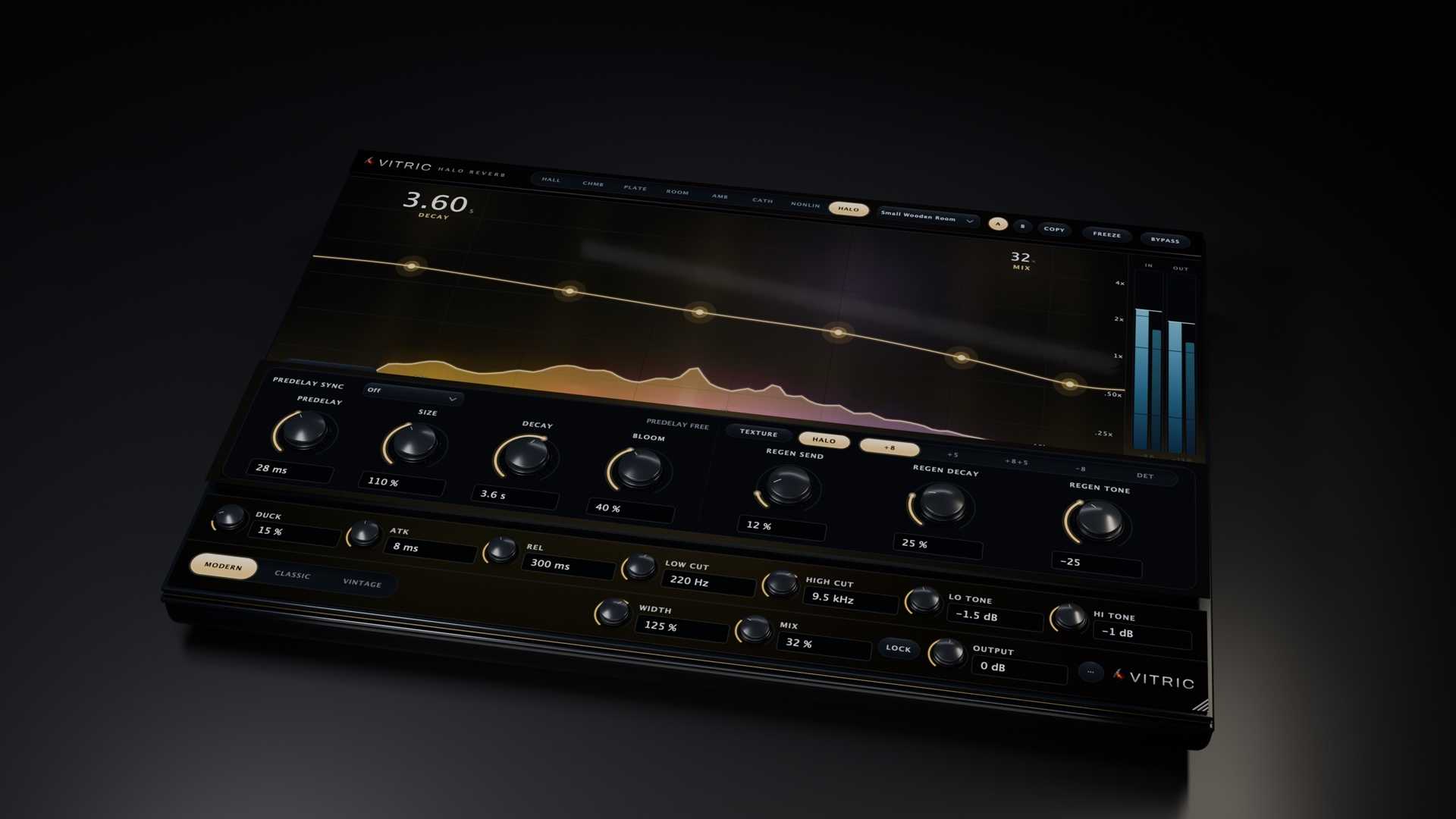
An algorithmic reverb with eight spaces, each its own engine, and a six-band decay contour you drag directly on the tail's own light. Decay from 0.1 to 60 seconds, a freeze that holds a tail losslessly, ducking on the unit, and HALO's pitched regeneration inside the tail. Zero latency.
Eight spaces. One curve of light.
An algorithmic reverb with eight spaces, each its own engine, and a six-band decay contour you drag directly on the tail's own light. Decay from 0.1 to 60 seconds, a freeze that holds a tail losslessly, ducking on the unit, and HALO's pitched regeneration inside the tail. Zero latency.
Eight spaces. One curve of light.
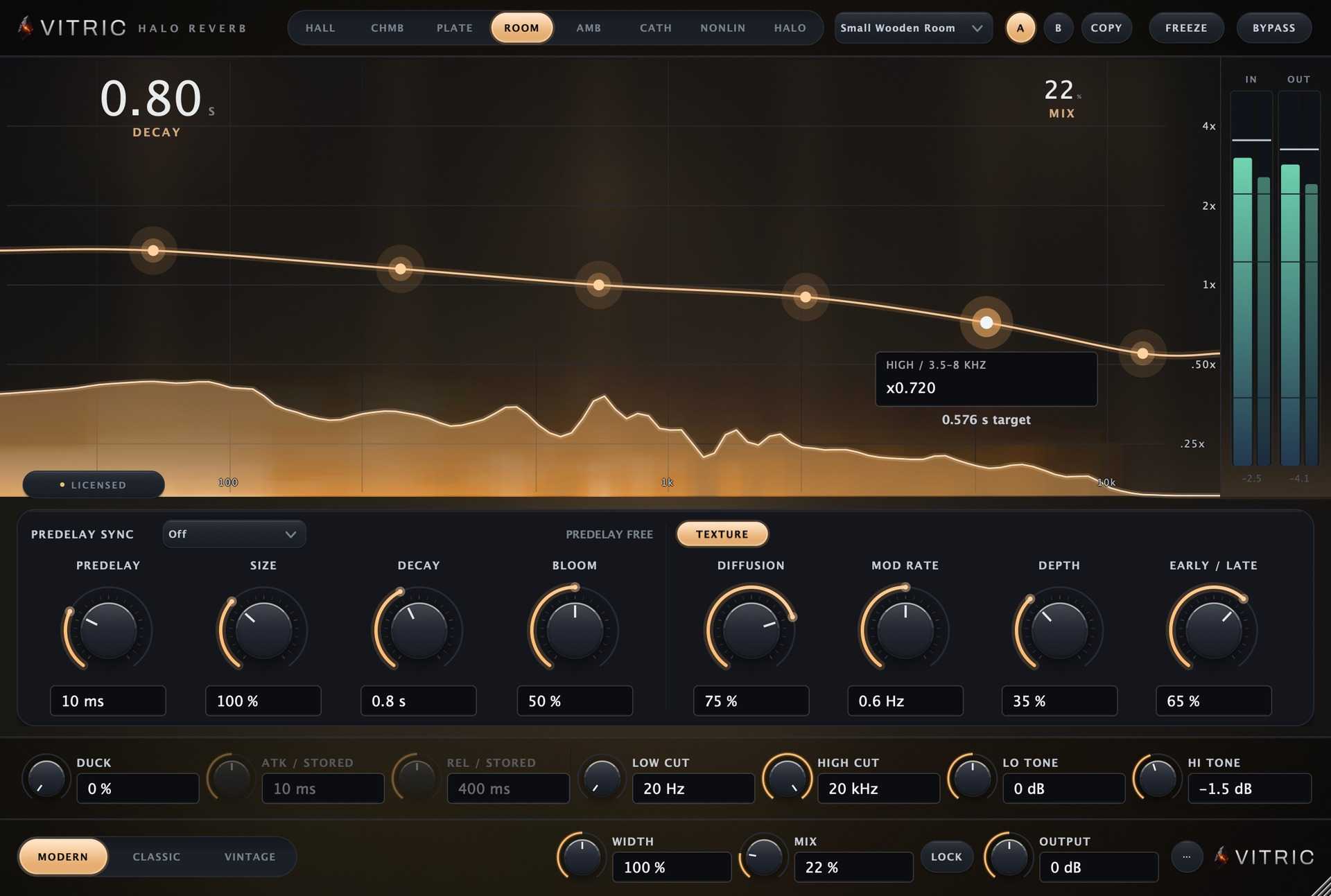
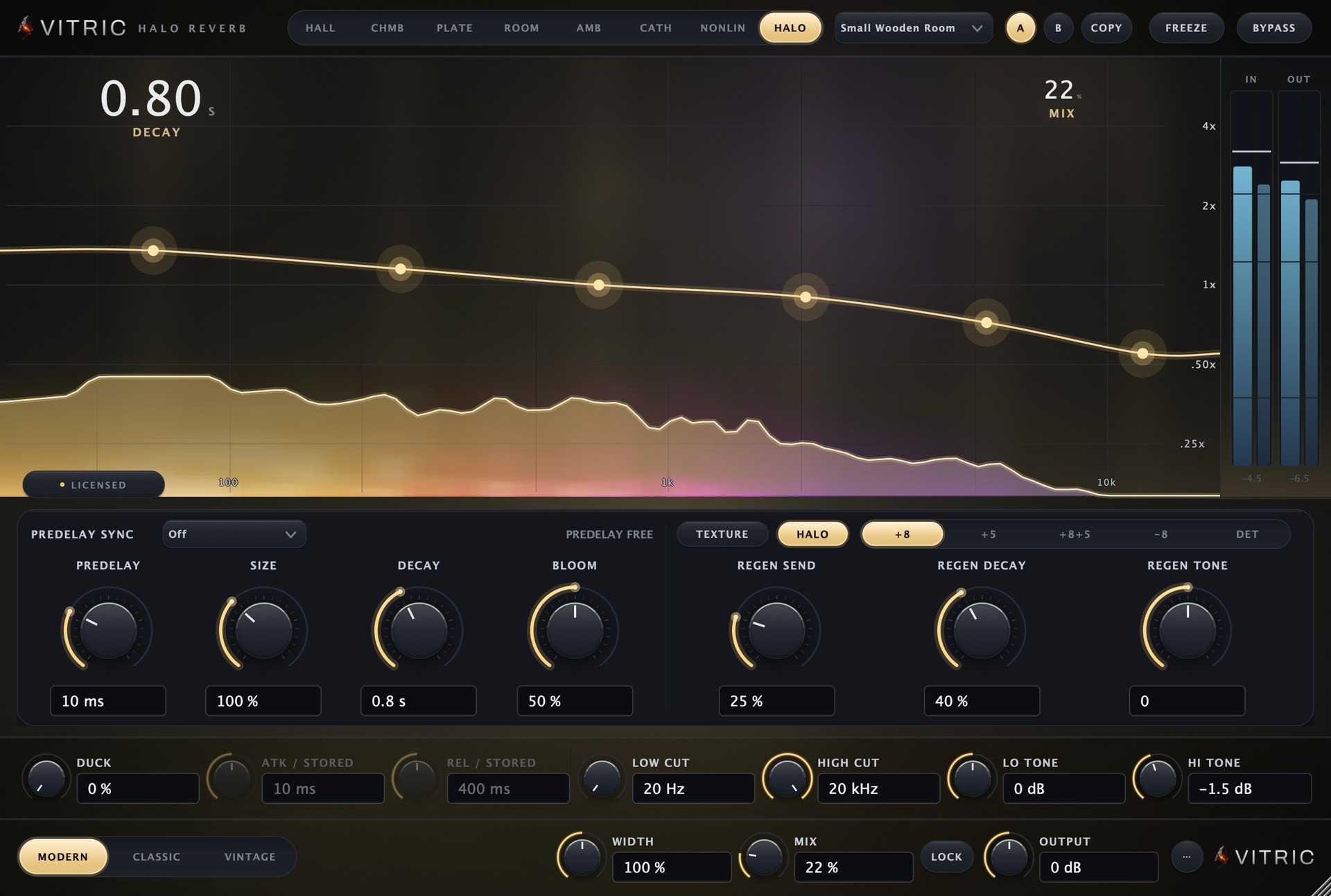
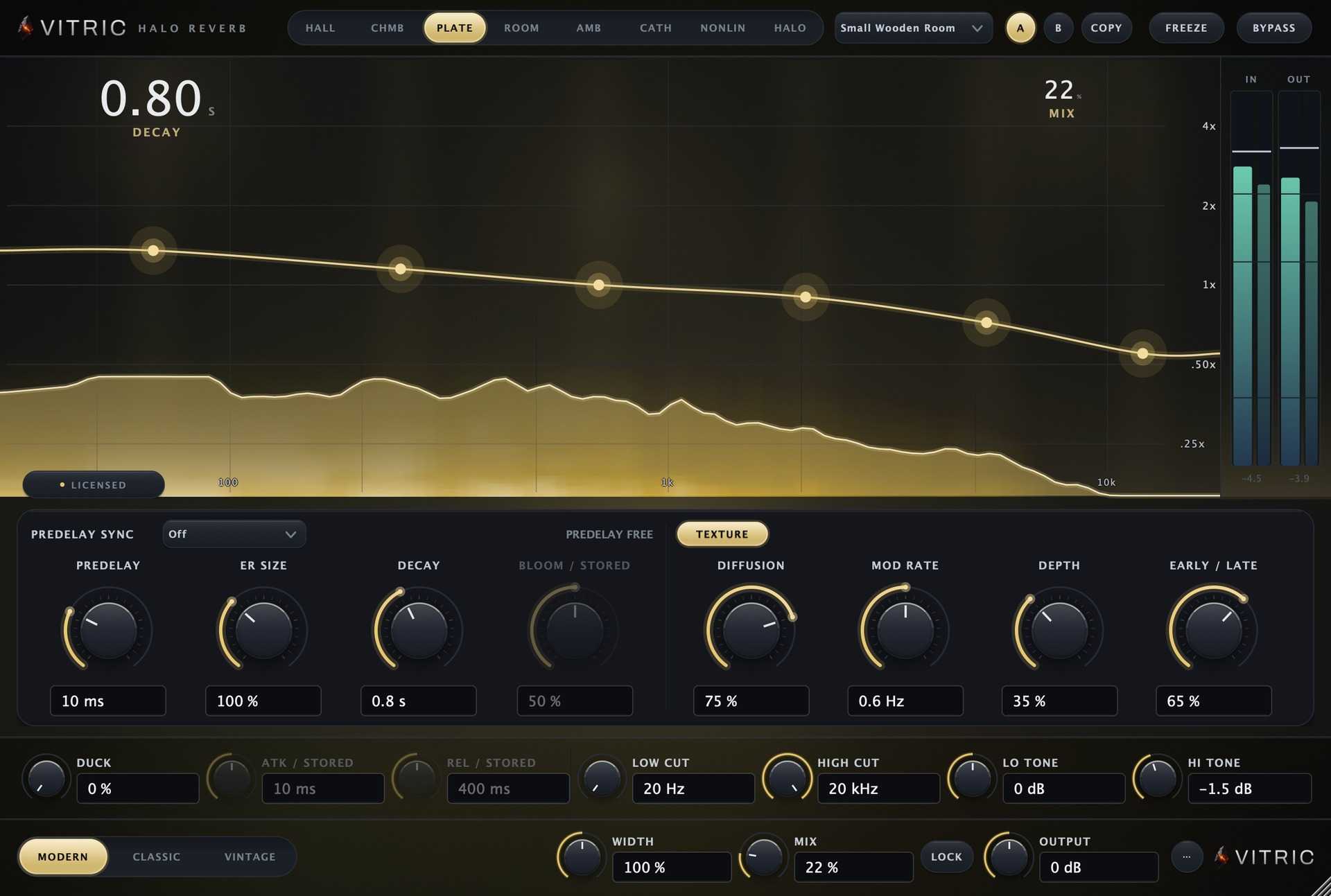
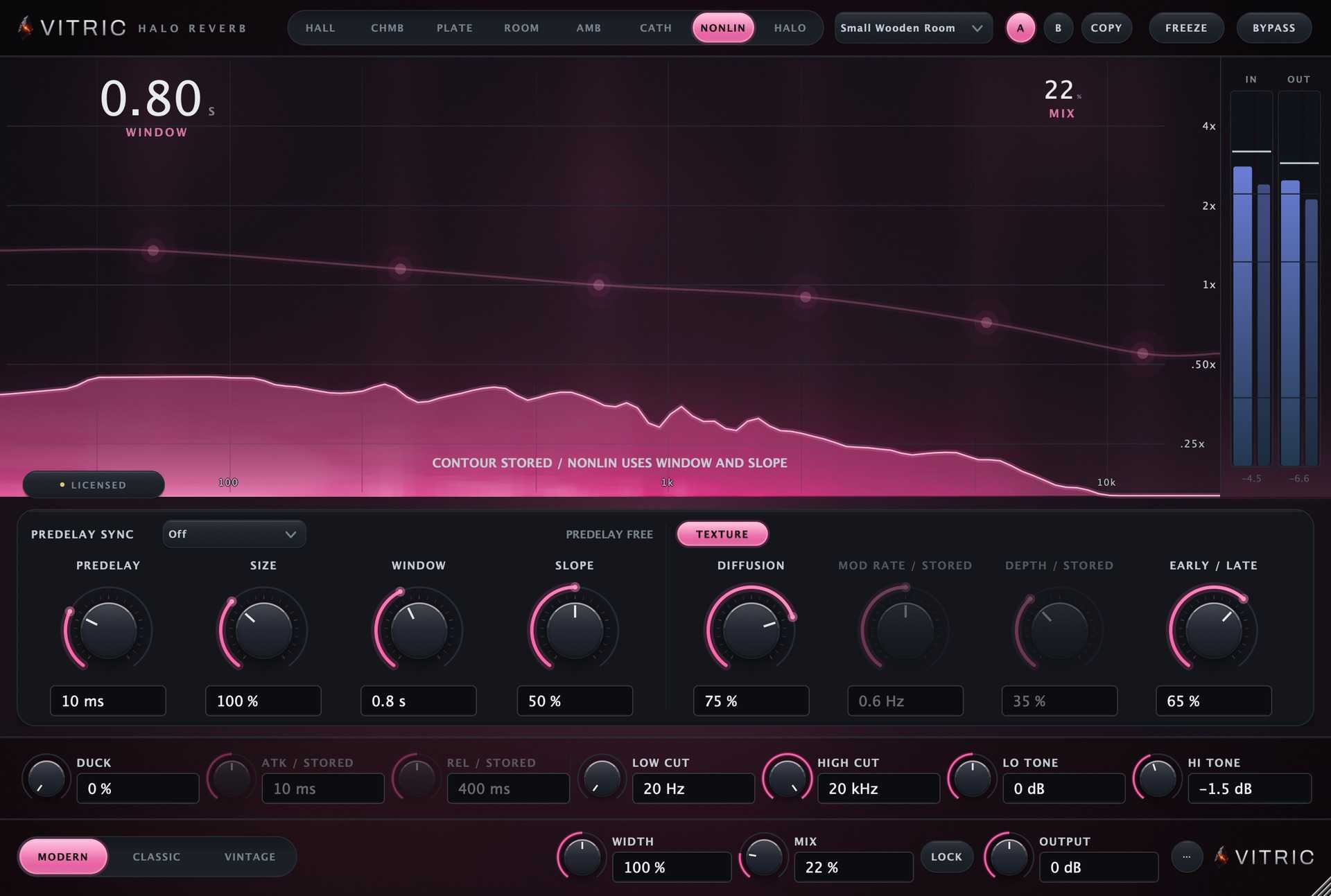
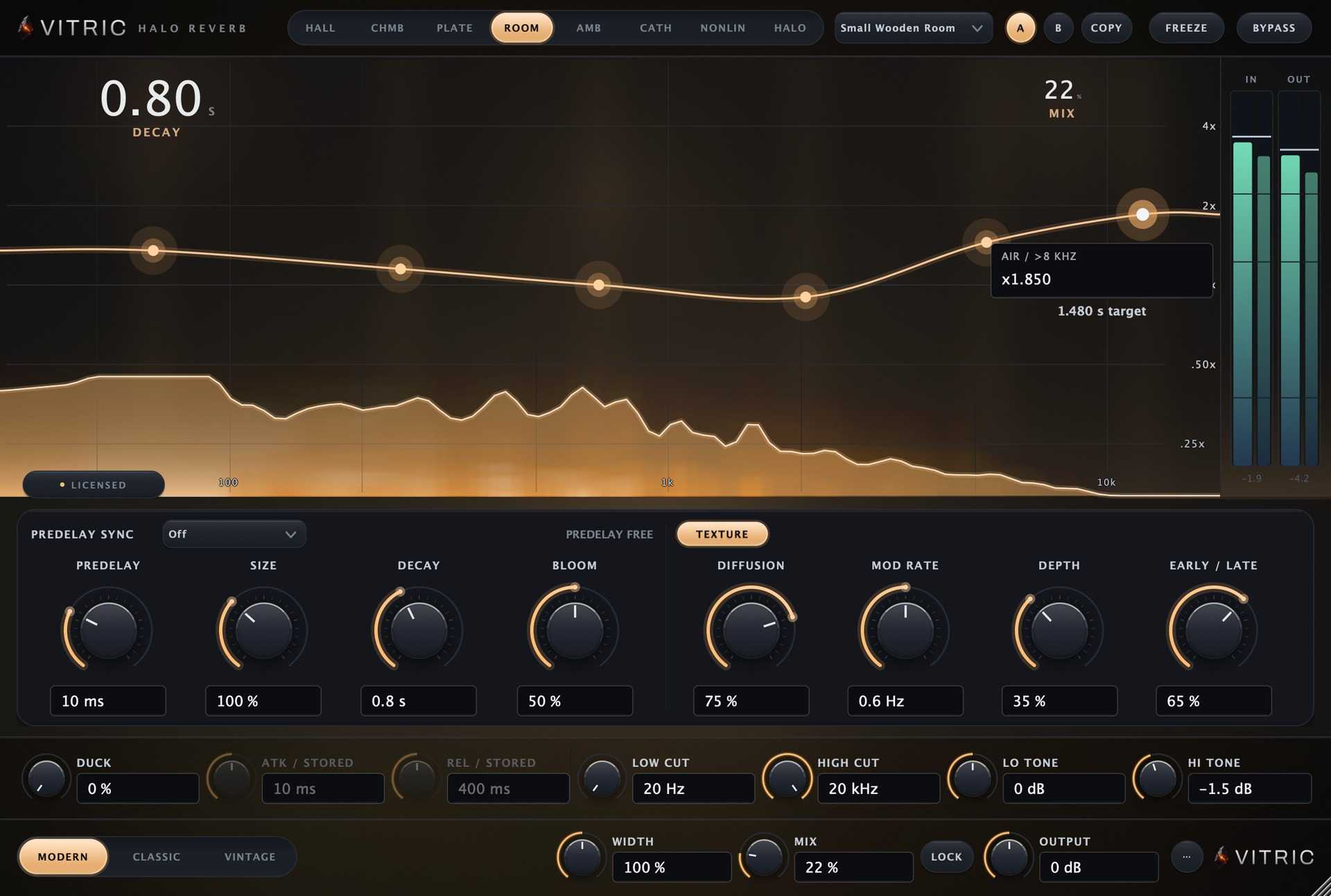
Halo Reverb puts a sound in a space, from a small room to a long cathedral tail, with eight spaces to pick from. Choose Hall, Chamber, Plate, Room, Ambience, Cathedral, Nonlin or HALO, then set the size and how long it rings, 0.1 to 60 seconds. Add predelay, a short gap before the tail starts, so words stay clear. Trim the tail with low and high cuts, set the width and use ducking, so the reverb leans back while the singer sings and swells in the gaps. Start with the six-band decay contour: in the feedback spaces each band scales the main decay from 0.25x to 4x, so the low end stays short while the highs ring, without an equalizer after the reverb. The display draws the tail as light, so you can watch ducking dim it and freeze hold it still. Three era settings change the overall tone: MODERN at full bandwidth, CLASSIC capped at 15 kHz, VINTAGE darker at 10 kHz. The HALO space adds a pitch shifter inside the tail, with five intervals for shimmer. With 43 factory presets in six banks and zero latency in your chain, it covers everyday rooms and long effect tails.
Not enough reviews yet
SPACE PROCESSOR
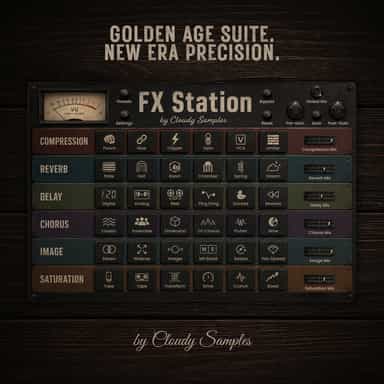
Golden Age Suite. New Era Precision.
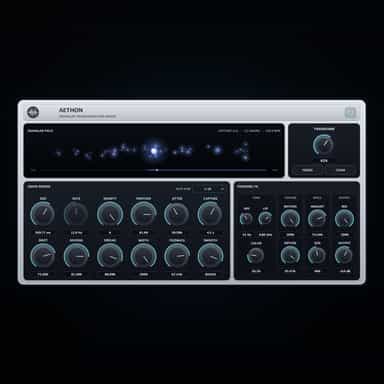
A Granular FX Engine for Movement and Texture
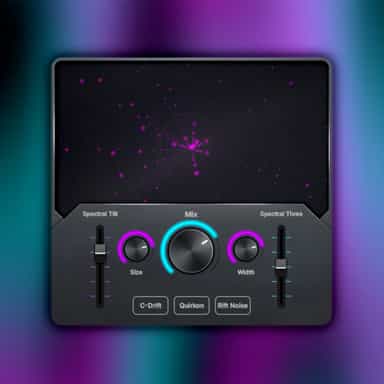
Turn simple sounds into vast atmospheres.
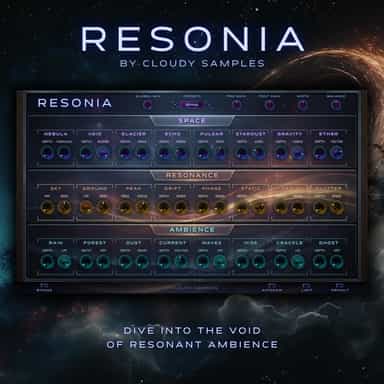
Dive into the void of resonant ambience.
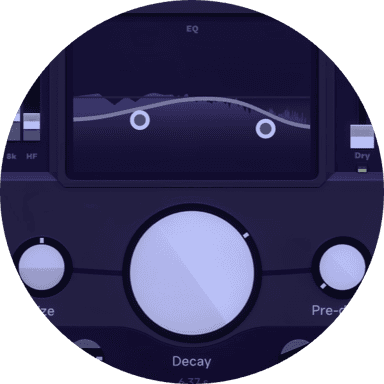
Versatile Algorithmic Reverb
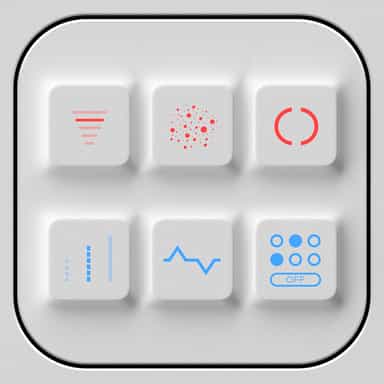
Next-Gen Reverb Plugin
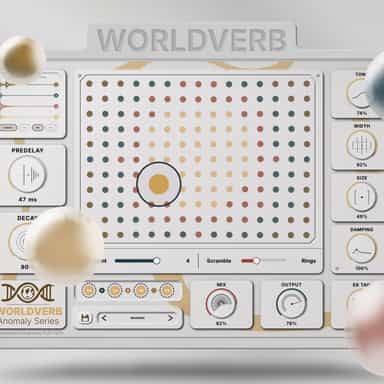
Build impossible rooms from real spaces.

Authentic Simulated Reverb

Animistic Performance Reverb