

-49%
Colonnade Delay
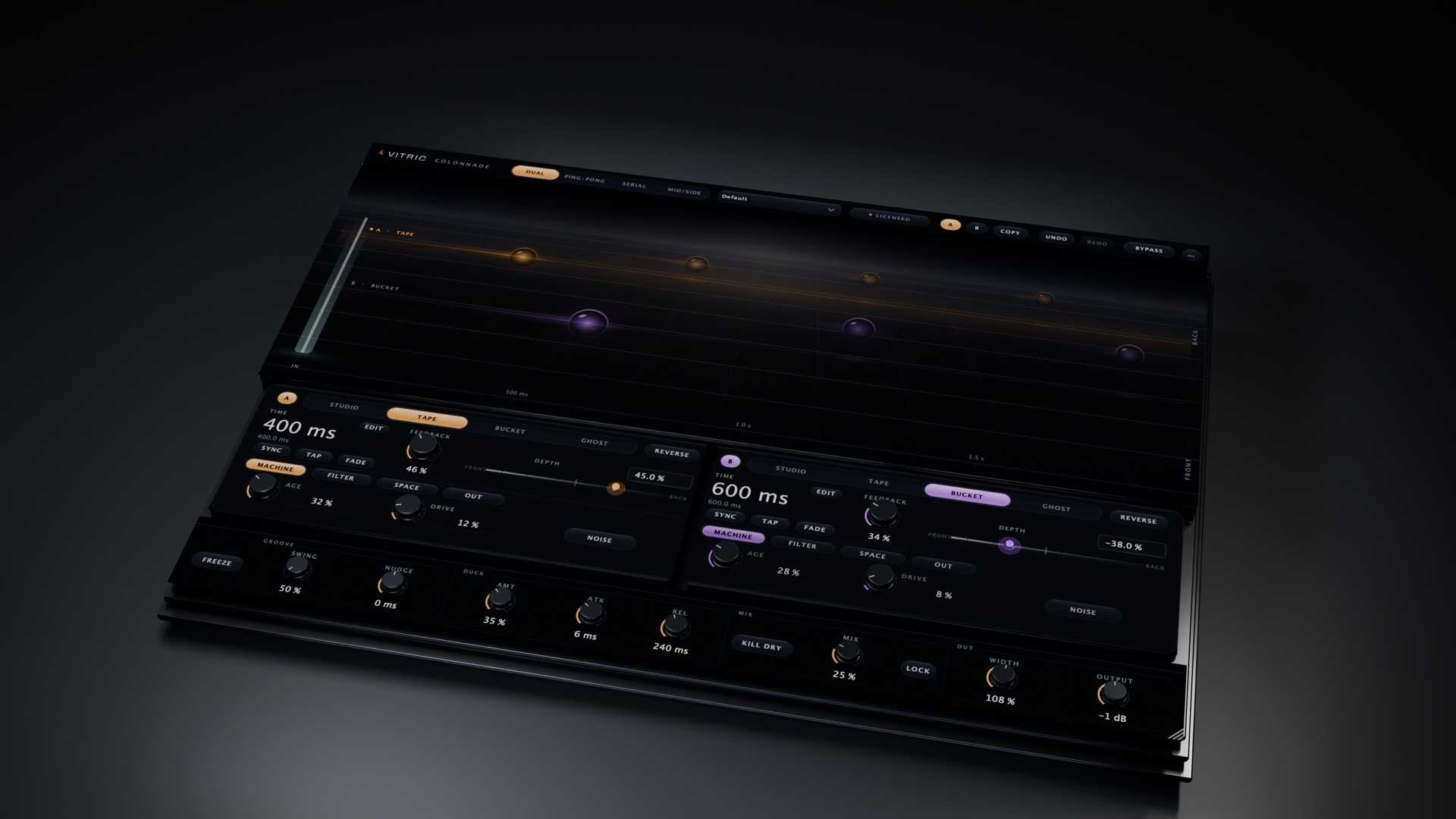
A dual-engine character delay that stages its echoes on a real depth axis. Two independent delay lines, four machines living inside the feedback loop, and one Depth control per engine that drives level, air absorption, smear, arrival time and width together. Zero samples of latency at every setting.
Echoes staged in space.
-49%
Colonnade Delay
A dual-engine character delay that stages its echoes on a real depth axis. Two independent delay lines, four machines living inside the feedback loop, and one Depth control per engine that drives level, air absorption, smear, arrival time and width together. Zero samples of latency at every setting.
Echoes staged in space.
Previews
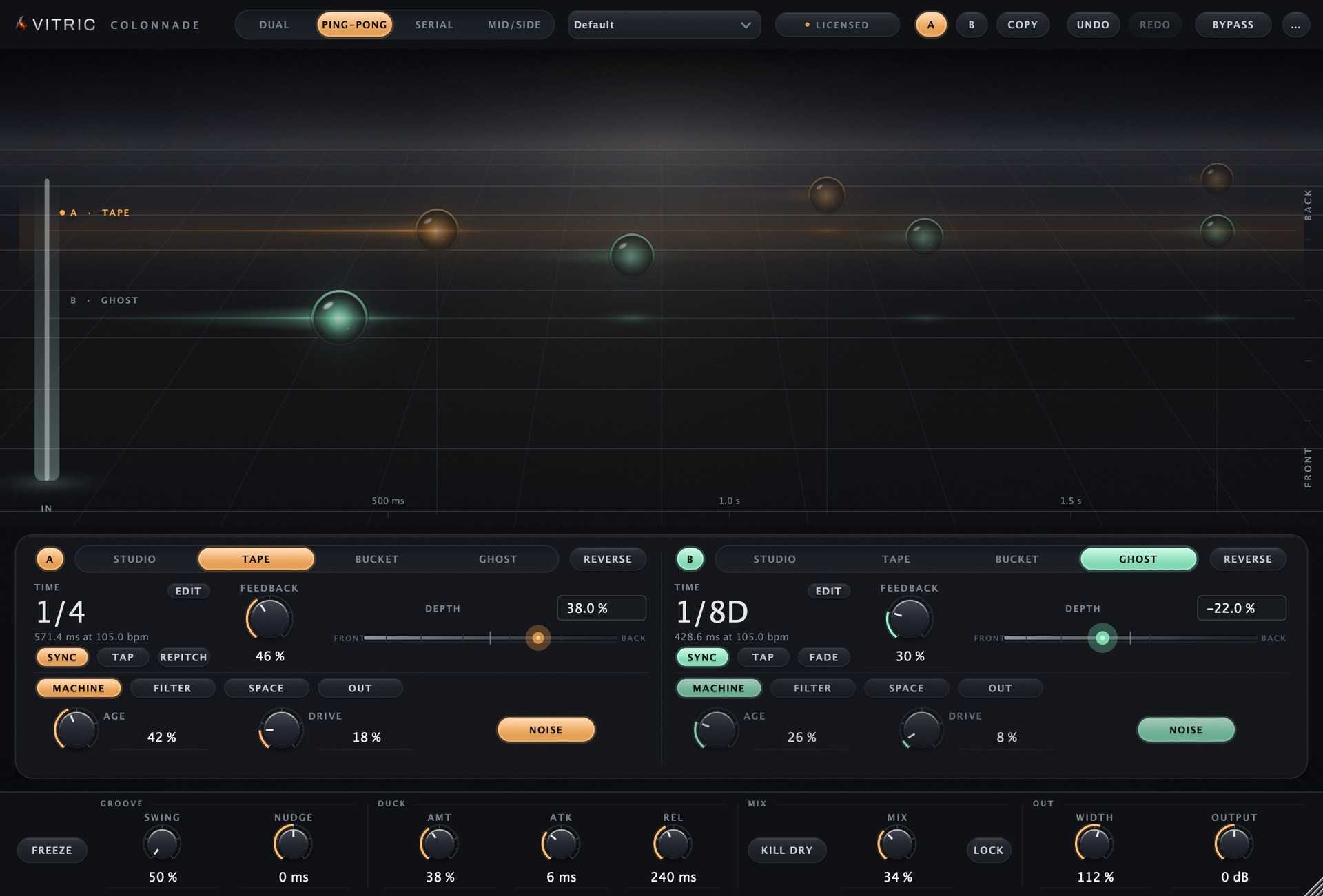
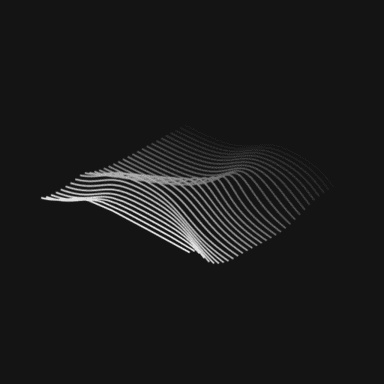
Colonnade Delay in motion
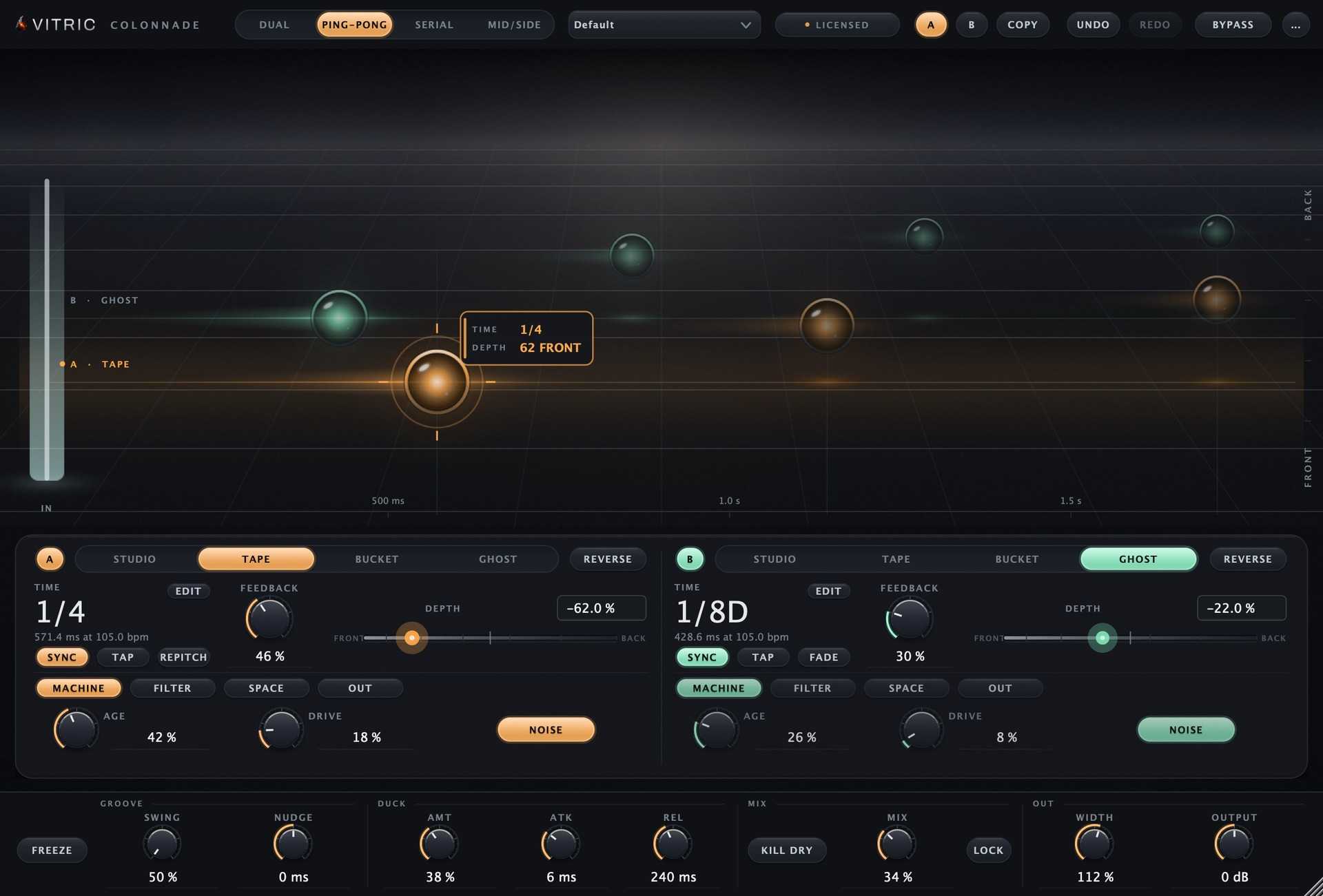
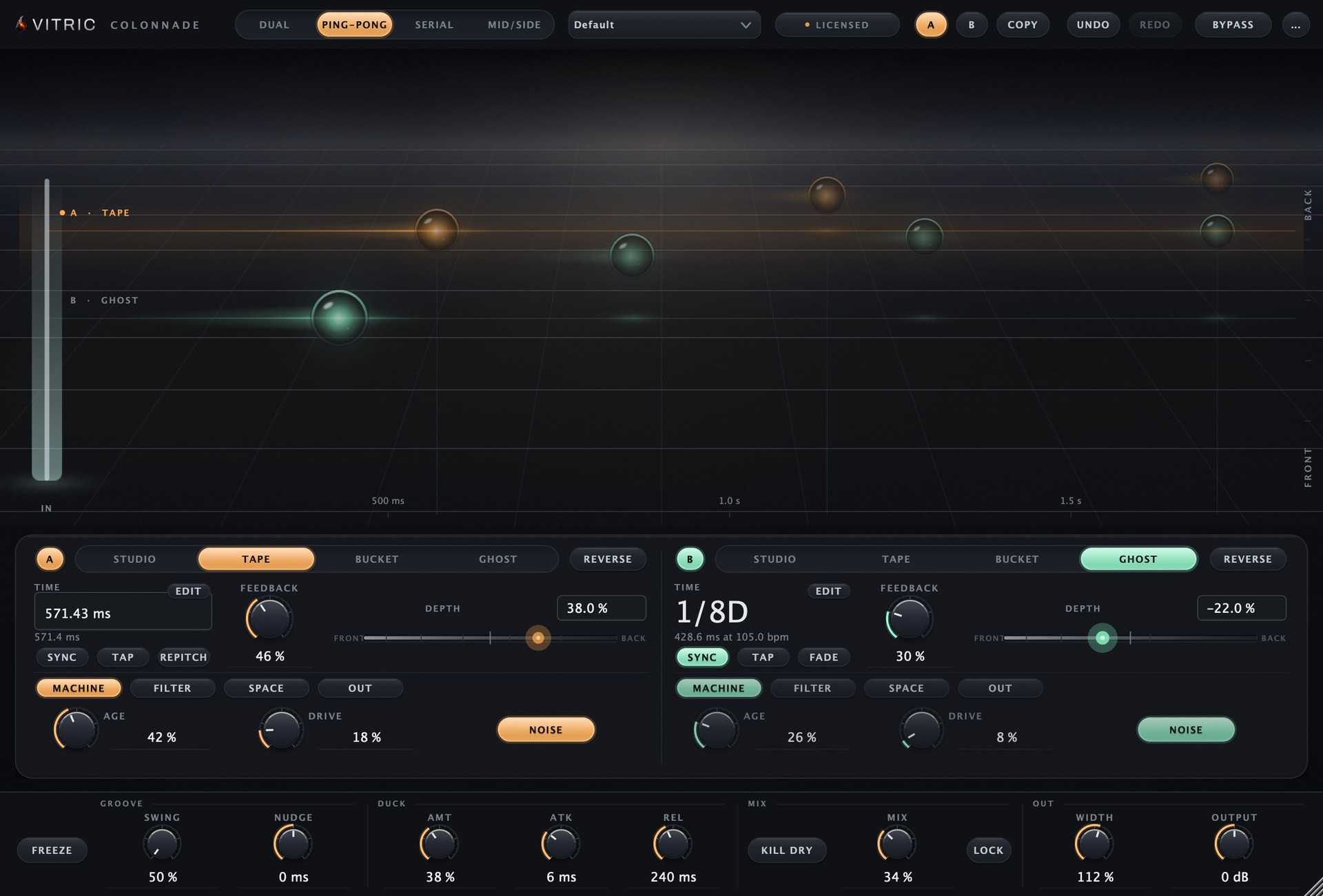
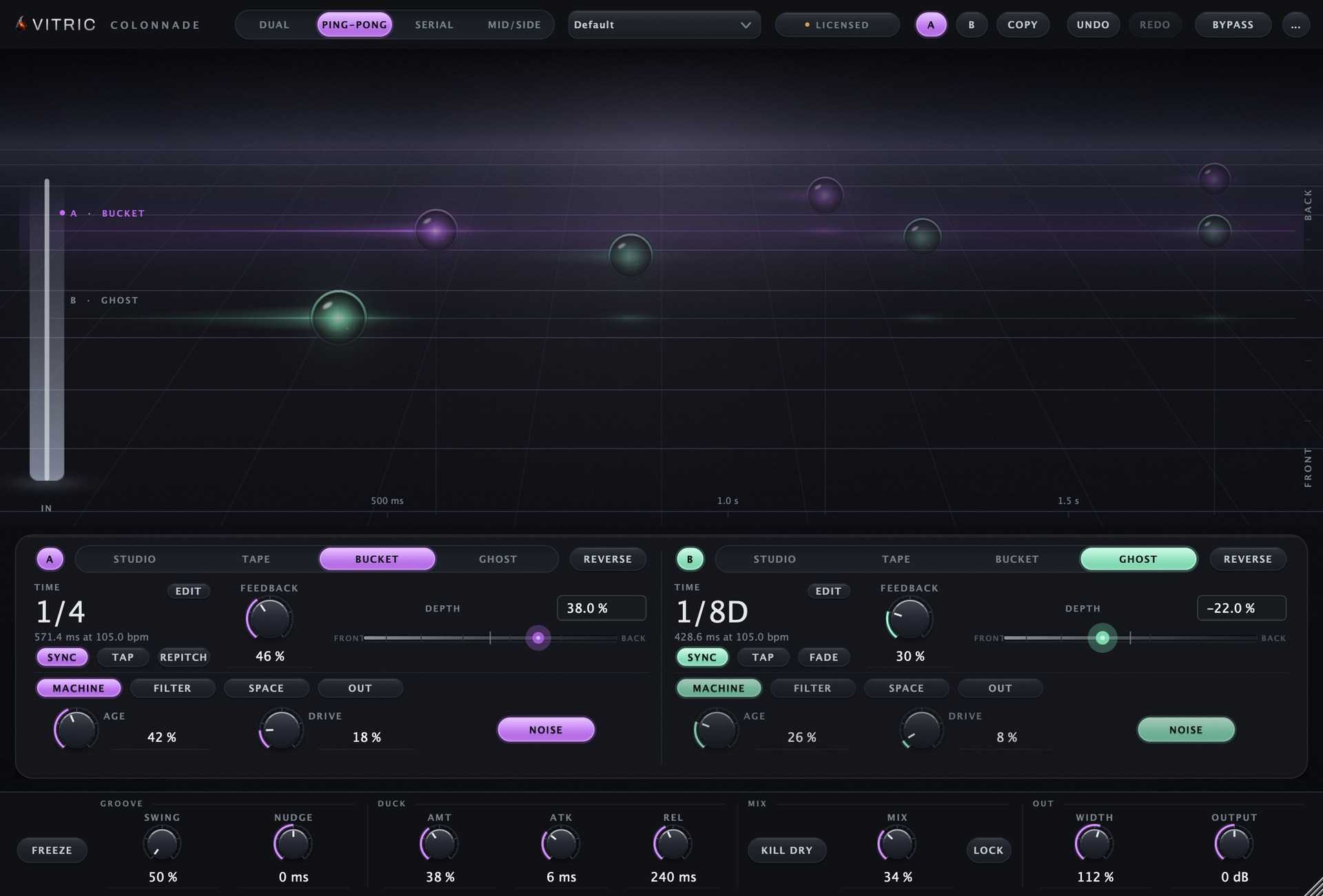
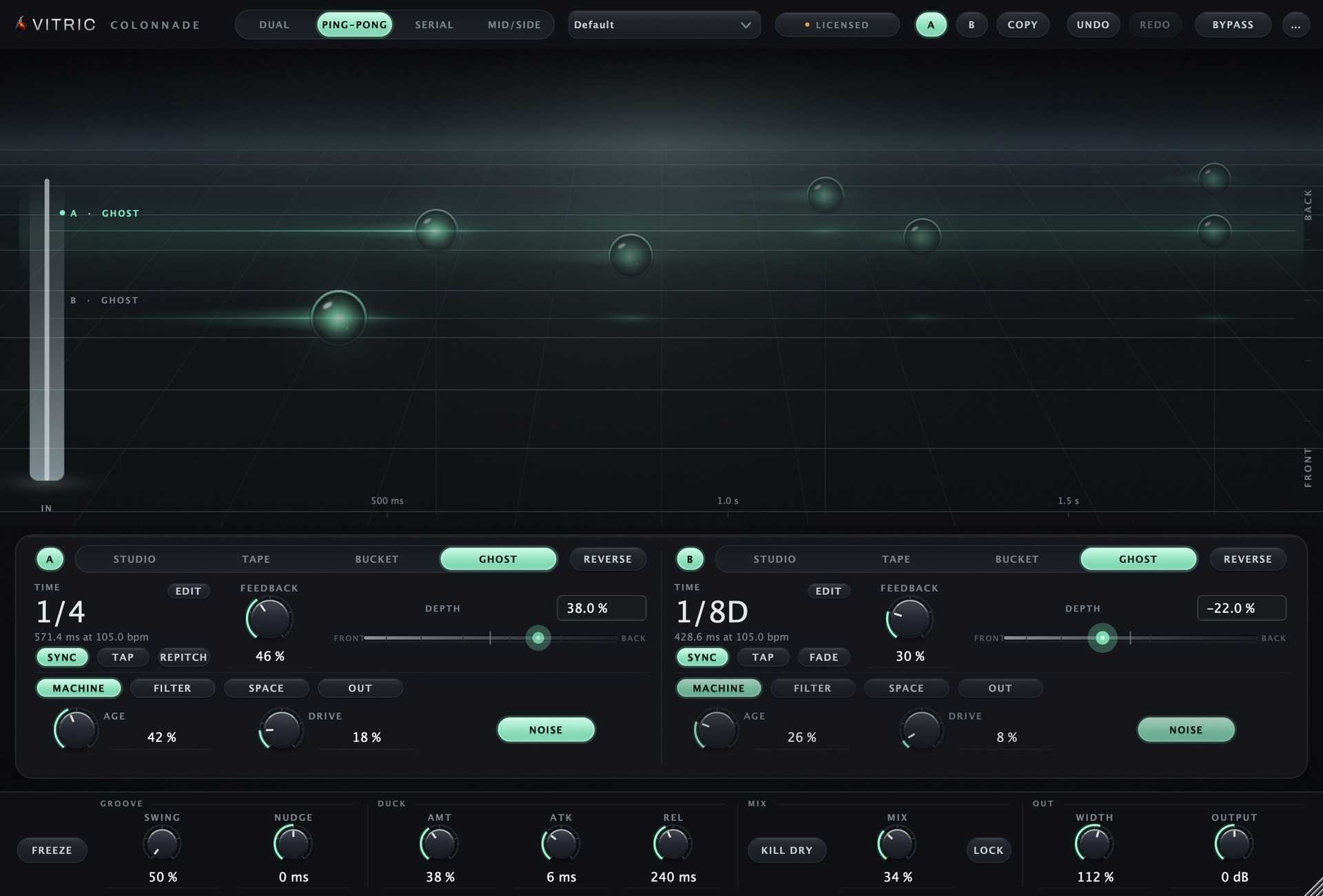
The A and B decks are complete, independent delay lines: character, time, feedback, filter, pitch, diffusion, pan, width, level and depth each. Four characters live inside the feedback loop, so colour accumulates with every repeat the way it does in hardware. Studio is clean digital at any feedback setting. Tape carries program-dependent saturation, head bump and high-frequency loss that track tape speed, with wow and flutter built from measured machine behaviour. Bucket is a bucket brigade on a virtual clock that darkens as times stretch, compander pumping and all. Ghost is companded bit reduction that breathes with the signal. Each engine has its own Age control, calibrated new to worn, plus drive and an optional noise layer. Depth is the control the name is about. It runs from -100, in front of the dry signal, to +100, far behind it, driving level, air absorption, smear, arrival time and stereo width together, so a repeat recedes instead of just getting quieter. The echo stage draws every repeat where it actually sits, at its real time and depth, on a beat grid when synced, and the head node is grabbable: drag sideways for time, up and down for depth, with a HUD reading the values as you move. Time runs 1 ms to 4 s free or across 21 sync divisions with dotted and triplet, changed by Repitch, a tape transport glide, or Fade, a crossfade at constant pitch. Both are click-free, including through host tempo changes. Feedback goes to 120 percent: self-oscillation begins at 100 and stays bounded and musical, limited inside the loop the way tape saturation limits a real echo machine. A pitch shifter in the loop covers ±24 semitones for shimmer ladders that build per repeat, diffusion runs from discrete repeats to a washed smear without moving the echo off the grid, a multimode resonant filter sits in each feedback path, and ducking rides the dry signal. Routing is Dual, Ping-Pong, Serial or Mid/Side, and synced engines take swing from 50 to 75 percent plus a ±30 ms nudge either side of the pocket. Zero latency at all settings, and nothing is reported to the host because nothing is needed. Echo placement is sample-accurate at 44.1, 48, 96 and 192 kHz, and both engines working cost about 1.4 percent of one core at 48 kHz. There are 44 factory presets in six sections, freeze, per-engine reverse, kill dry, mix lock, output trim, global width, tap tempo, A/B with copy, undo and redo, and a window resizable from 1000x680 to 1860x1260. Colonnade Delay has no oversampling or high-quality mode, and no modulation matrix: it is a character and depth instrument, not a modular routing environment. If your work needs those, this is not the delay for that part of it. Built and used at a working recording studio.
What Colonnade Delay offers
Two independent delay lines: character, time, feedback, filter, pitch and depth each
Studio, Tape, Bucket and Ghost inside the feedback loop, so wear accumulates per repeat
Depth from -100 front to +100 back: level, air, smear, arrival time and width in one move
An echo stage that draws every repeat at its real time and depth, with a grabbable node
Routing Dual, Ping-Pong, Serial or Mid/Side, with swing 50 to 75% and a 30 ms nudge
Zero samples of latency at every setting, pitch in the loop to ±24 semitones, 44 presets
What’s new
- First MuseHub release of Colonnade Delay (1.1.0). The MuseHub edition installs and opens directly from the Hub.
- New in 1.1.0: visible exact TIME editing for free milliseconds and seconds or the existing sync divisions, plus exact DEPTH and other continuous values, larger page and utility knob faces, FILTER OFF and MID/SIDE PAN cues that explain stored settings which are currently inactive, and anchored time and stage drags so pressing or releasing Shift with a stationary pointer does not move the value.
1.1.0