Developers unite: the 2024 MuseHub hackathon in London
On December 14–15, 2024, the Centre for Digital Music at Queen Mary University of London hosted the first MuseHub hackathon: 24 hours for coders, musicians, designers and product people to form a team and build an app or plugin from scratch, with the most complete projects offered a release on MuseHub.
This is what was built — the winners, the near-misses and the ideas that made the room laugh — and what happened to them afterwards.
Music Transcription Studio on MuseHub

To achieve greatness, two things are needed: a plan, and not quite enough time. — Leonard Bernstein
Participants came from product management, audio development and the creative side, and the projects ranged from audio utilities and music generators to sound-effect tools and the beginnings of an augmented-reality DAW. Industry mentors were on hand through the night with technical help and an eye on what makes a tool shippable.
A panel of judges then reviewed the finished projects and picked the most innovative and MuseHub-ready for release. The hackathon exists because MuseHub’s mission includes launching new developers, and a room of 70 places with more than 90 sign-ups is a good place to start. Twelve teams presented in three to five minutes each; the livestream recording has all of them.
The winners

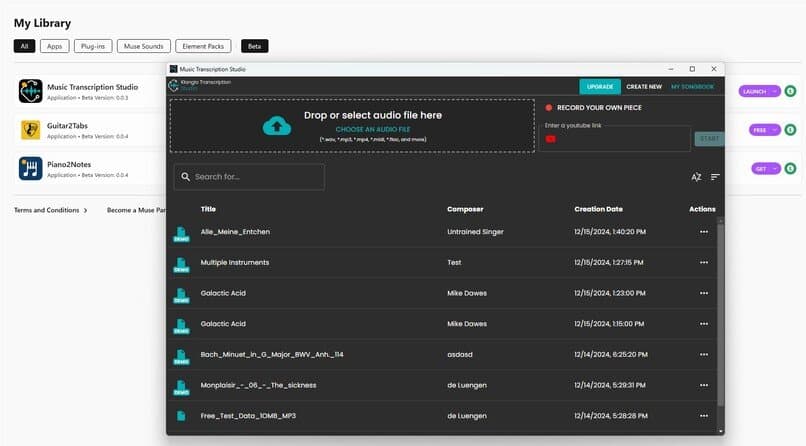
The “Ready for MuseHub” category went to Klangio for Music Transcription Studio. Over the weekend the team used Electron to turn their existing web service into a full desktop app and added new features on top. The app uses AI models to produce notated scores or MIDI files from audio recordings — solo instruments and ensembles alike — and transcribes the lyrics too. It has since shipped on MuseHub, where it is free to install.
Collider
Second came Collider, a plugin with a playful interface that generates rhythms and soundscapes from circles bouncing off walls — a physics toy that happens to make music.
Ambiful
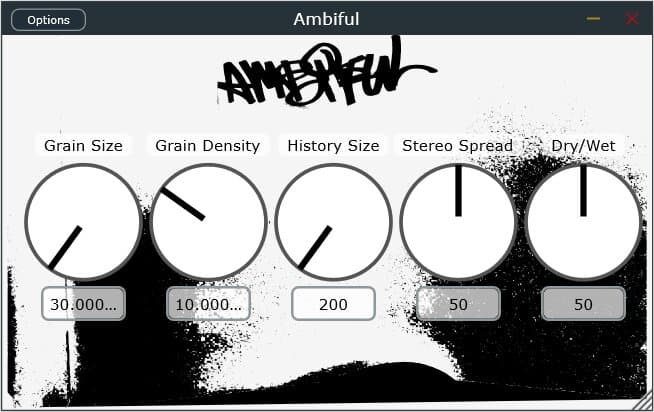
Third, Ambiful: a stereo granular effect that transforms a sound by scattering its grains across the stereo field.
Honourable mentions
Memoloop
A looper for iOS that behaves like a tape loop: record, cut in, speed up and slow down for effects you cannot get from a grid.

DAW-XR
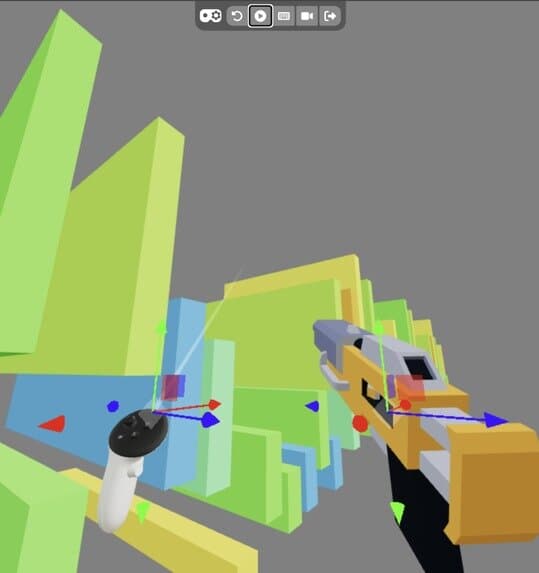
A browser-based mixed-reality DAW that puts your tracks in a 3D space you can edit and visualize in real time, built on WebXR.
RelaxSync
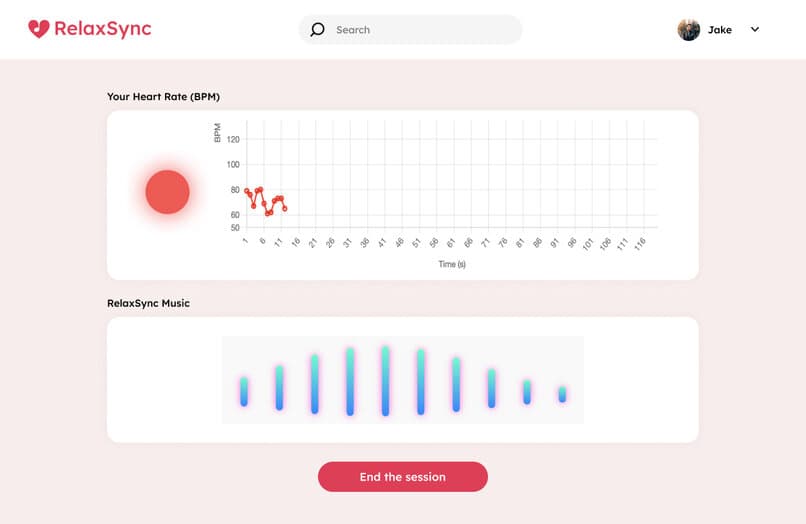
Reads your heartbeat and adapts the music to your stress level — a meditation aid that listens back.
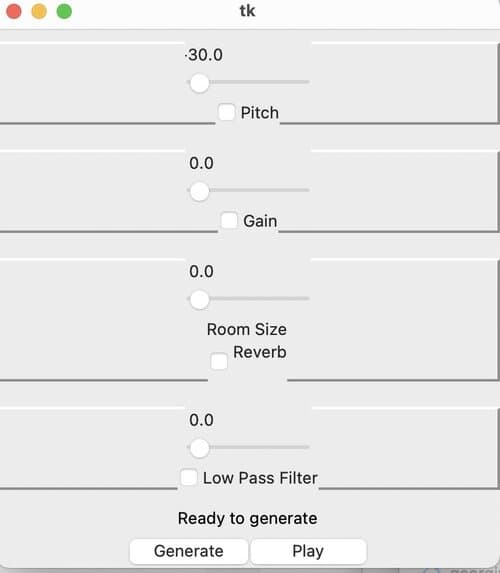
Heel-Toe Footstep Generator
Foley for games, television and film is slow work — every footstep has to match a character’s movement. This app combines two recordings into near-infinite footstep variations, so a sound-design session gets up and running (pun intended) much faster.
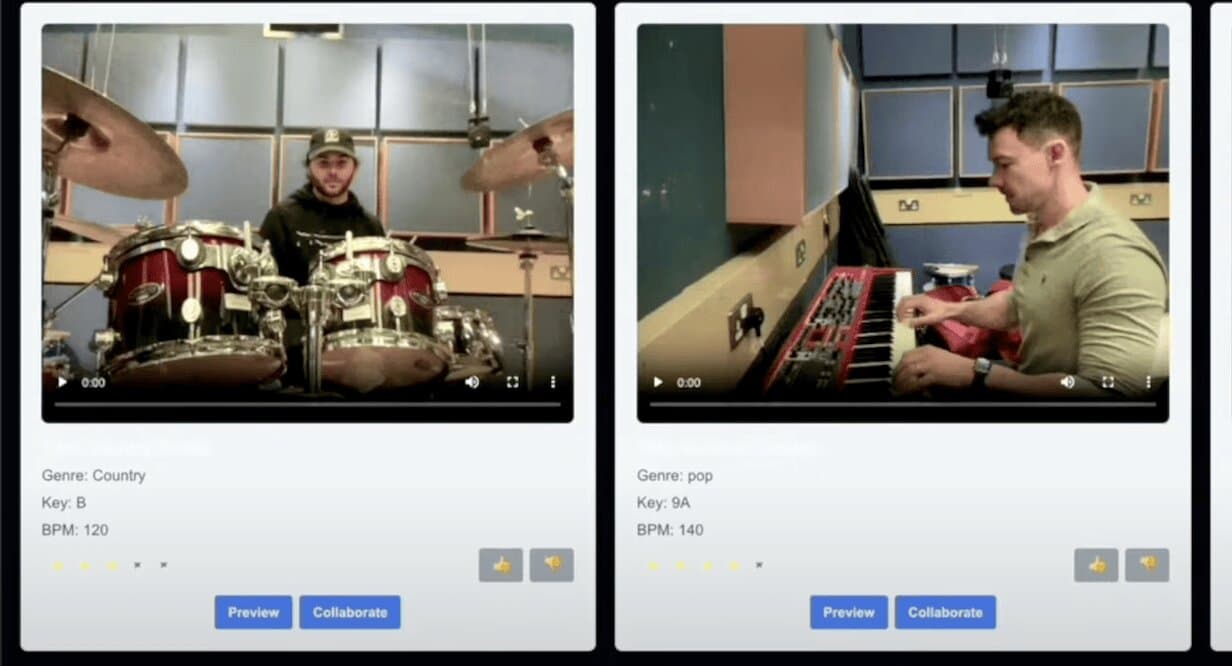
JamSync
Record or submit videos to build a track — like a synchronized video call you can play back and add participants to at any point. Built for music videos with remote contributors.
Windchime
A plugin driven by real-time wind data that simulates chimes in a breeze — a source of organic, pseudo-random patterns for triggering synths and instruments.

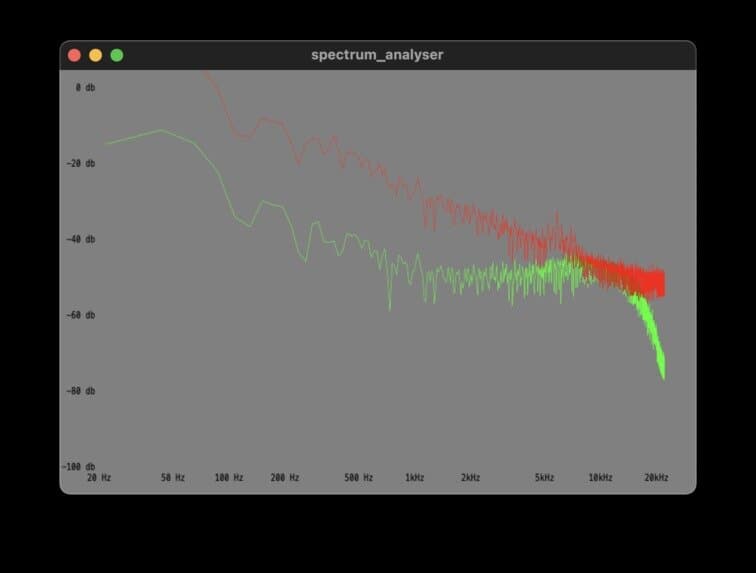
Audio Spectrum Analyser
A working analyser that shows the input signal in the frequency domain, useful for spotting problem areas in a mix. The team wrote it in Cmajor, a new audio development language, having learned it from scratch that weekend. Zero to plugin in 24 hours on an unfamiliar framework is the kind of thing hackathons are for.
Every project, participant and partner is on the hackathon gallery.
Next steps
If a weekend like this is your idea of fun, how to make VST plugins covers the tools these teams used, and how to sell and distribute plugins covers what the winners did next. Music Transcription Studio is one of the best music transcription apps we have reviewed since. Publishing something of your own starts at Distribute on MuseHub.