HEAT MAN
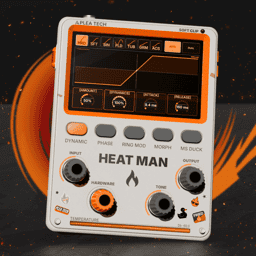
Five destructive saturation engines stuffed into a retro handheld console. Dynamic, Phase, Ring Mod Sidechain, Morph wavetable, and MS Duck. Stack two at once with the Dual Matrix. One analog hardware strip.
5 distortion engines. One plugin.
HEAT MAN
Five destructive saturation engines stuffed into a retro handheld console. Dynamic, Phase, Ring Mod Sidechain, Morph wavetable, and MS Duck. Stack two at once with the Dual Matrix. One analog hardware strip.
5 distortion engines. One plugin.
Previews
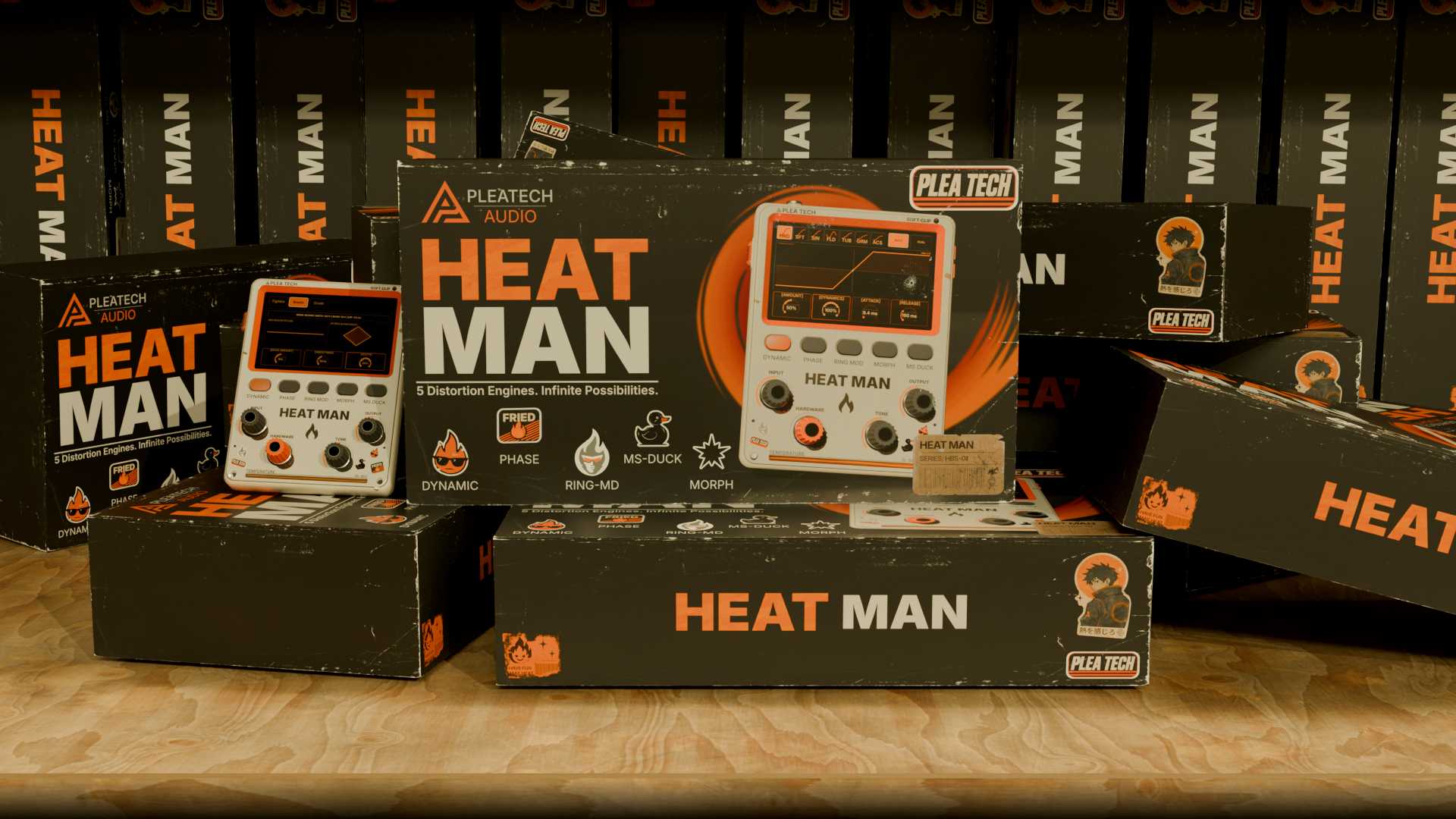
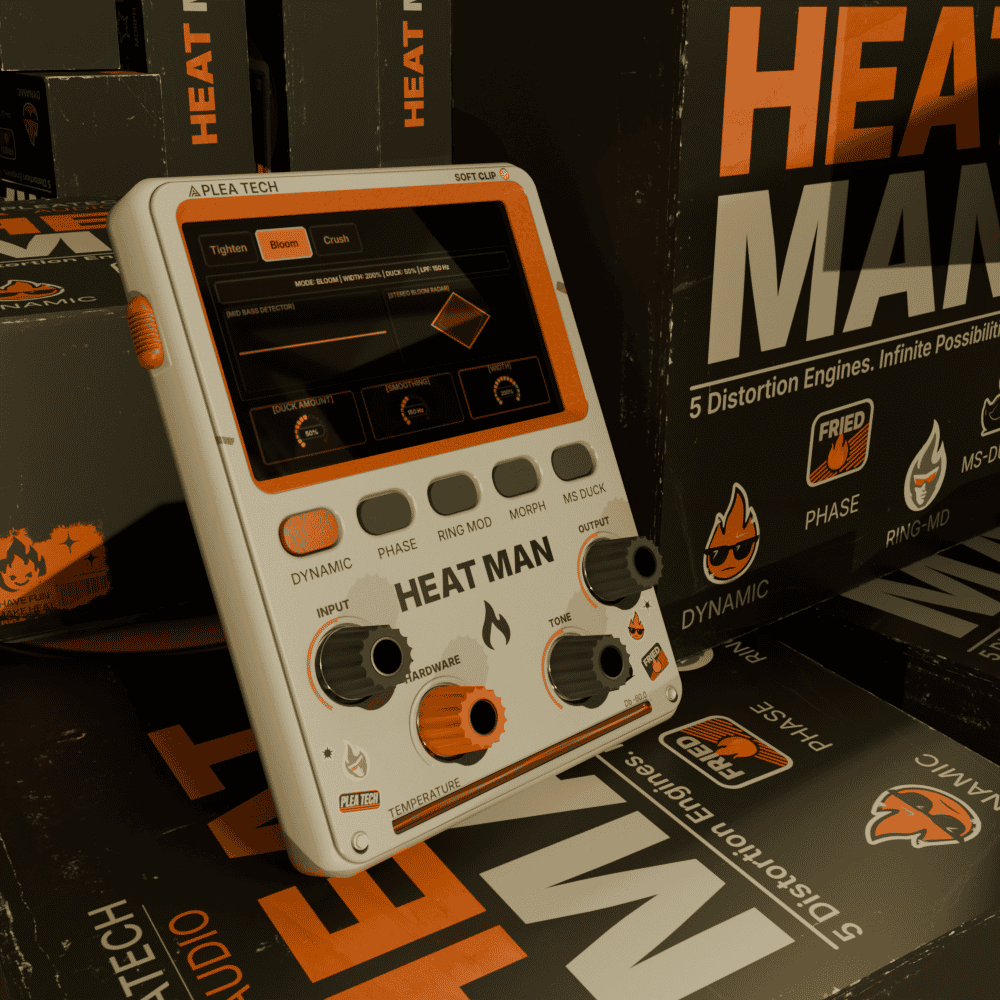
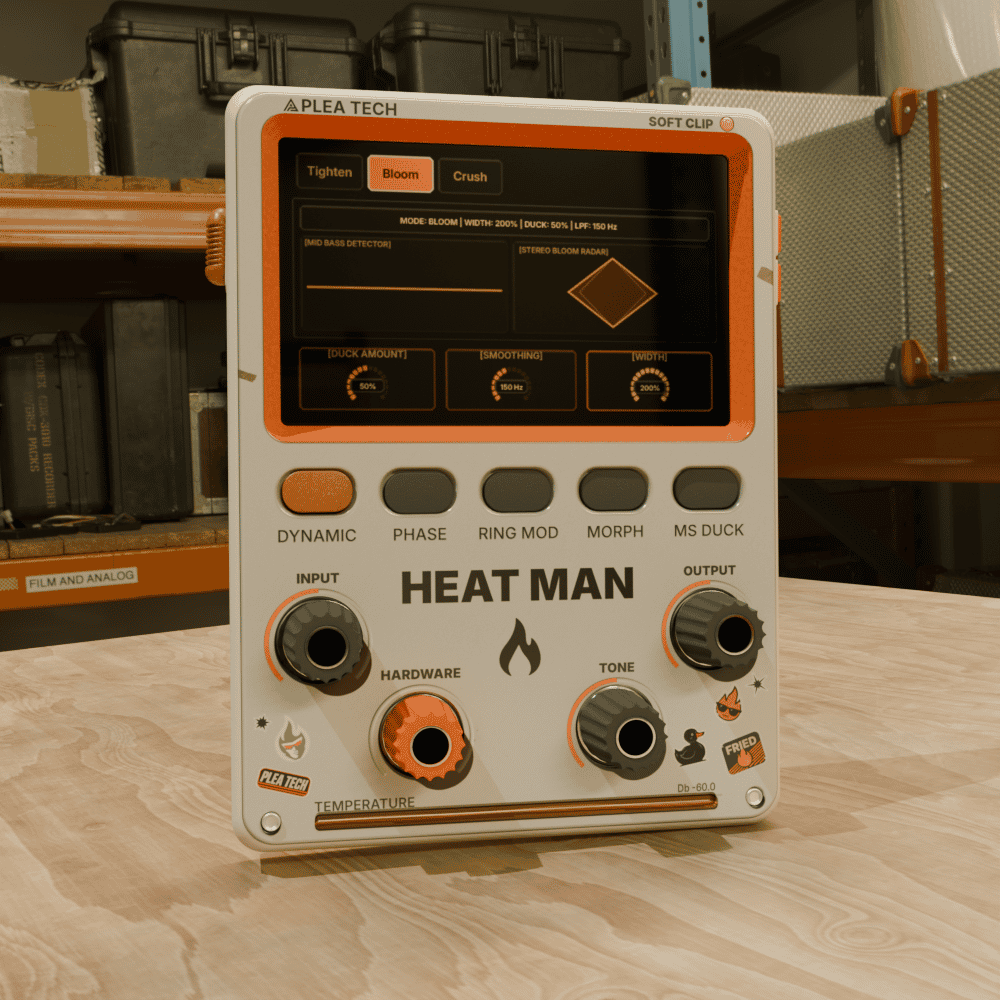
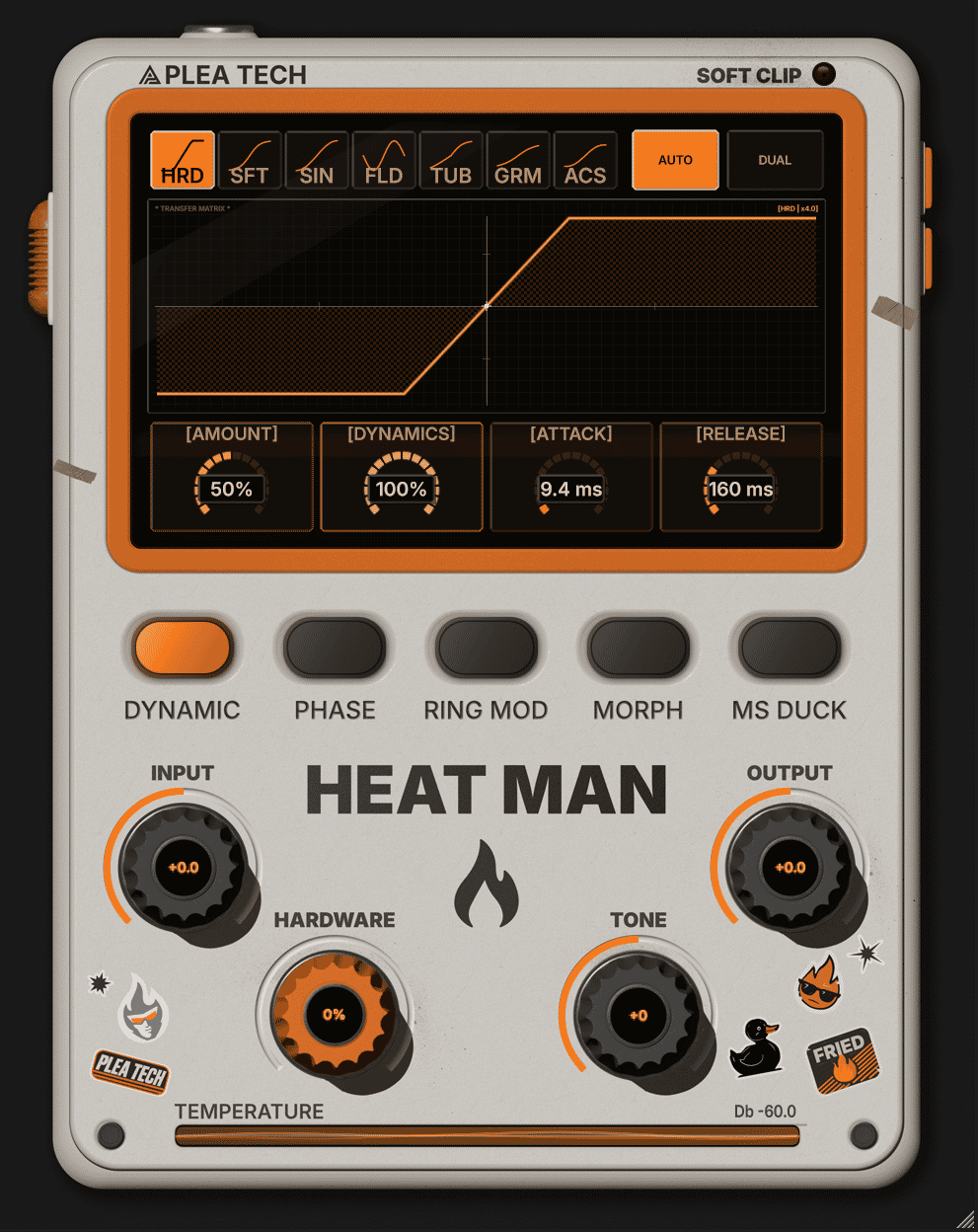
So here's the dumb thing I did: I kept wanting one distortion plugin that covered everything I needed without bouncing between four different ones. Reasonable ask. Should be simple. It was not simple, and it took way longer than I want to admit, but the result is Heat Man, and I think it's pretty good. Five engines. Each one works differently, not just "soft clip vs hard clip" differently, but genuinely structurally different. The Dynamic engine pre-compresses your signal, hammers it through seven drive curves (Hard, Soft, Sine, Foldback, Tube, Grime, Acoustic), then mirrors the compression back on the output. You get thick, screaming harmonics while the transient punch stays mostly intact. Your kick doesn't go soft. Your snare still snaps. The Phase engine doesn't do amplitude clipping at all. It uses the audio's own waveform to modulate ultra-short delay buffers at audio rate, bends phase in real time to generate formant-like overtones and anti-phase stereo textures. I spent a lot of time in a rabbit hole about FM synthesis and this is what fell out the other end. Ring Mod Sidechain splits your incoming audio into sub-lows and highs, then uses every half-cycle of your sub-bass to rhythmically gate the top end. Your sub becomes the modulation source for your own treble. On bass-heavy material it creates this brutal, locked sync between the low-end thump and the top-end crunch. It's a bit unhinged and I mean that as a compliment. Morph lets you draw custom waveshaper transfer curves with tension bezier points across four frames, then automate the morph knob to glide between them. Factory banks included: Tape Grind, Bit Stairs, Fold Hell, Sine Fuzz. The 4x minimum-phase oversampling keeps it from going harsh when things get extreme. MS Duck splits mid and sides and dynamically ducks the sides sample-by-sample as your center bass and kick hit. On the transient the stereo field collapses to mono, then blooms wide in the gaps. Keeps the master bus clean without making everything sound narrow. You can run any two engines simultaneously with the Dual Matrix, serial A into B, serial B into A, or parallel with equal-power crossfade. Routing transitions are glitch-free so you can flip mid-drop without it clicking. There's also a Hardware strip. One knob, 0–100%, dials in six intertwined analog characteristics at once: asymmetric even-order saturation, dynamic HF rolloff, slew rate limiting, peak taming, signal-gated noise, and hysteresis on transient tails. All modeled on a 1980s rack unit. It's a nice way to add weight without thinking too hard, which is sometimes exactly what you need.
What HEAT MAN offers
Dynamic Engine: pre-compress, drive hard, recover the punch on the way out
Phase Engine: FM-style formant grit via audio-rate delay buffer modulation
Ring Mod Sidechain Engine: your sub-bass gates and tears your own top end
Morph Engine: draw custom waveshaper curves across 4 frames, automate between them
MS Duck Engine: stereo field clamps mono on the hit, blooms wide in the gaps
Dual Matrix: run any two engines serial or parallel, swap mid-drop.
What’s new
- Initial release on MuseHub
1.0.0