$14.99 $29.99
A subharmonic synthesizer that shows its work: a filtered mono detector finds the fundamentals that are actually in your source, up to three voices generate a sub one octave below each one, phase-locked to it, and the screen draws both. Blend is a volume sum, the sub is mono and dead center, and there is no compressor, ducker or auto-makeup anywhere in the box.
The subharmonic synthesizer that shows its work.
A subharmonic synthesizer that shows its work: a filtered mono detector finds the fundamentals that are actually in your source, up to three voices generate a sub one octave below each one, phase-locked to it, and the screen draws both. Blend is a volume sum, the sub is mono and dead center, and there is no compressor, ducker or auto-makeup anywhere in the box.
The subharmonic synthesizer that shows its work.
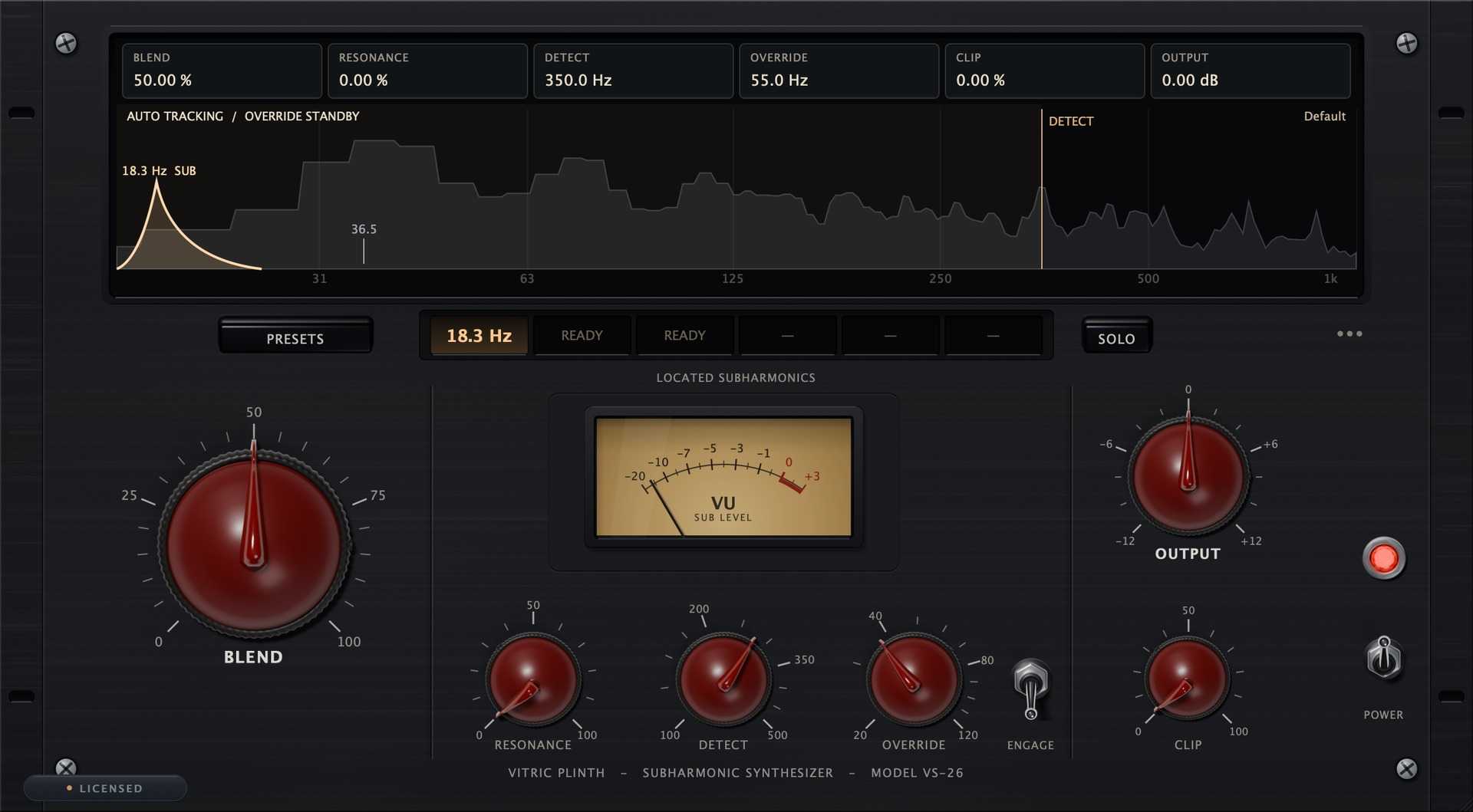
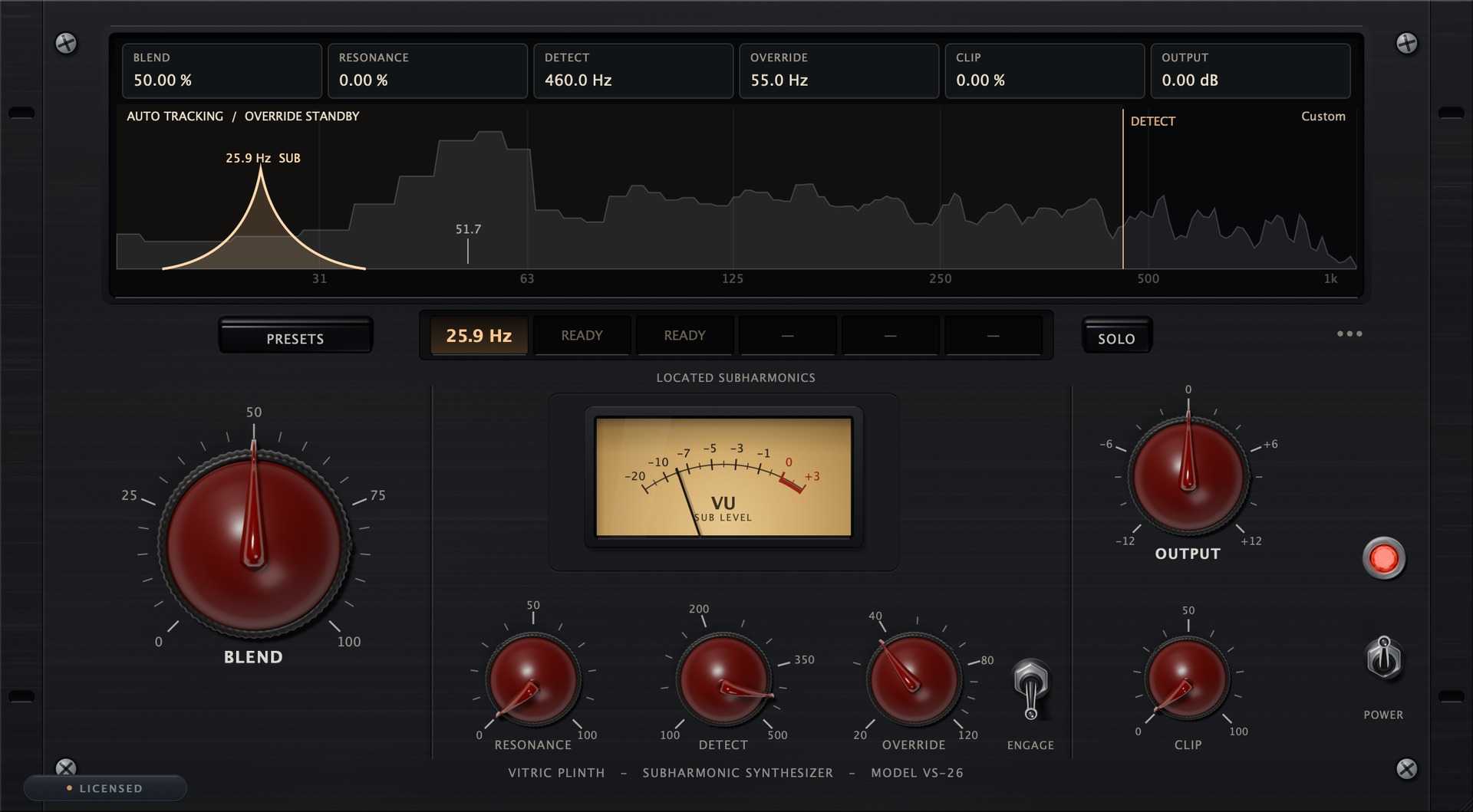
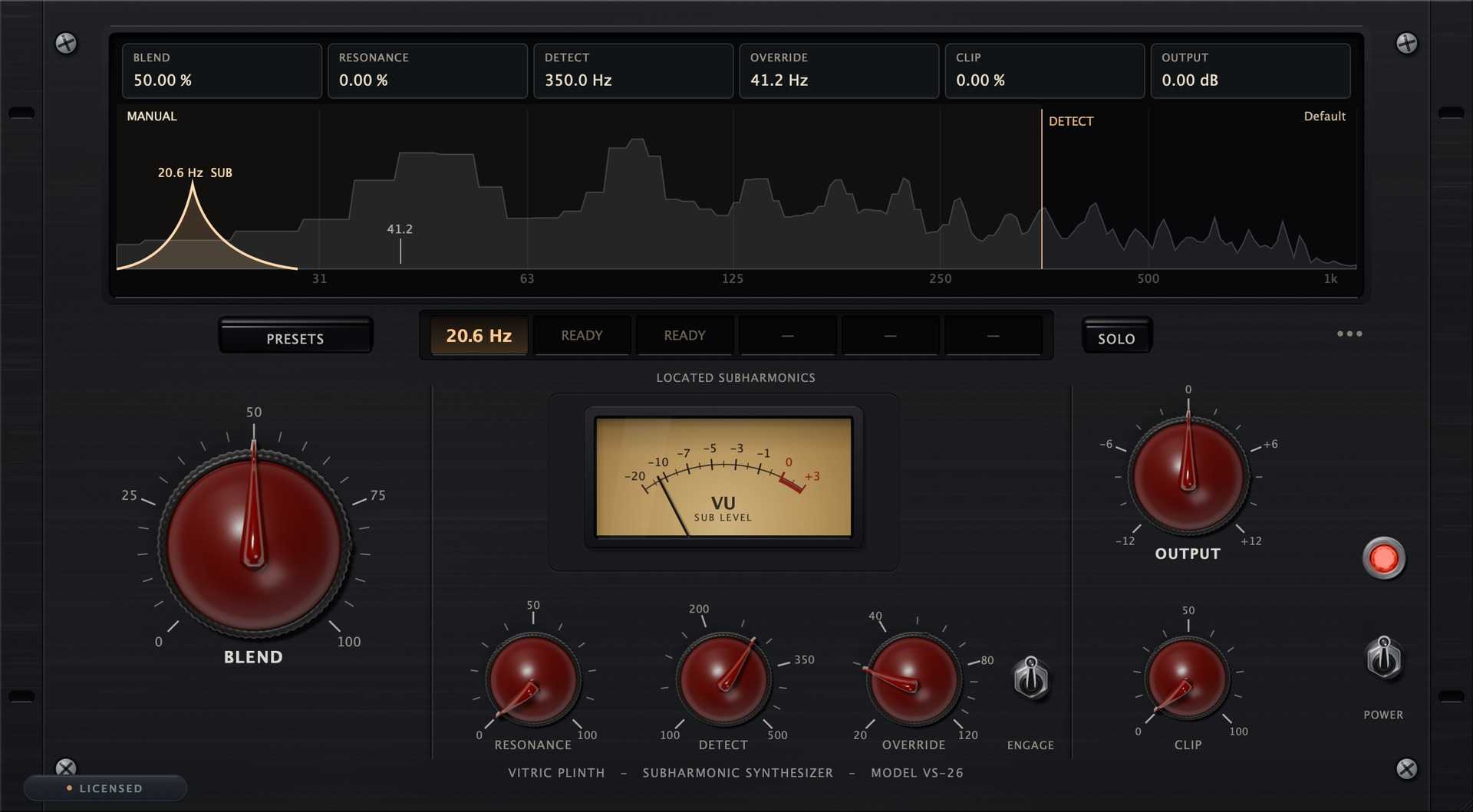
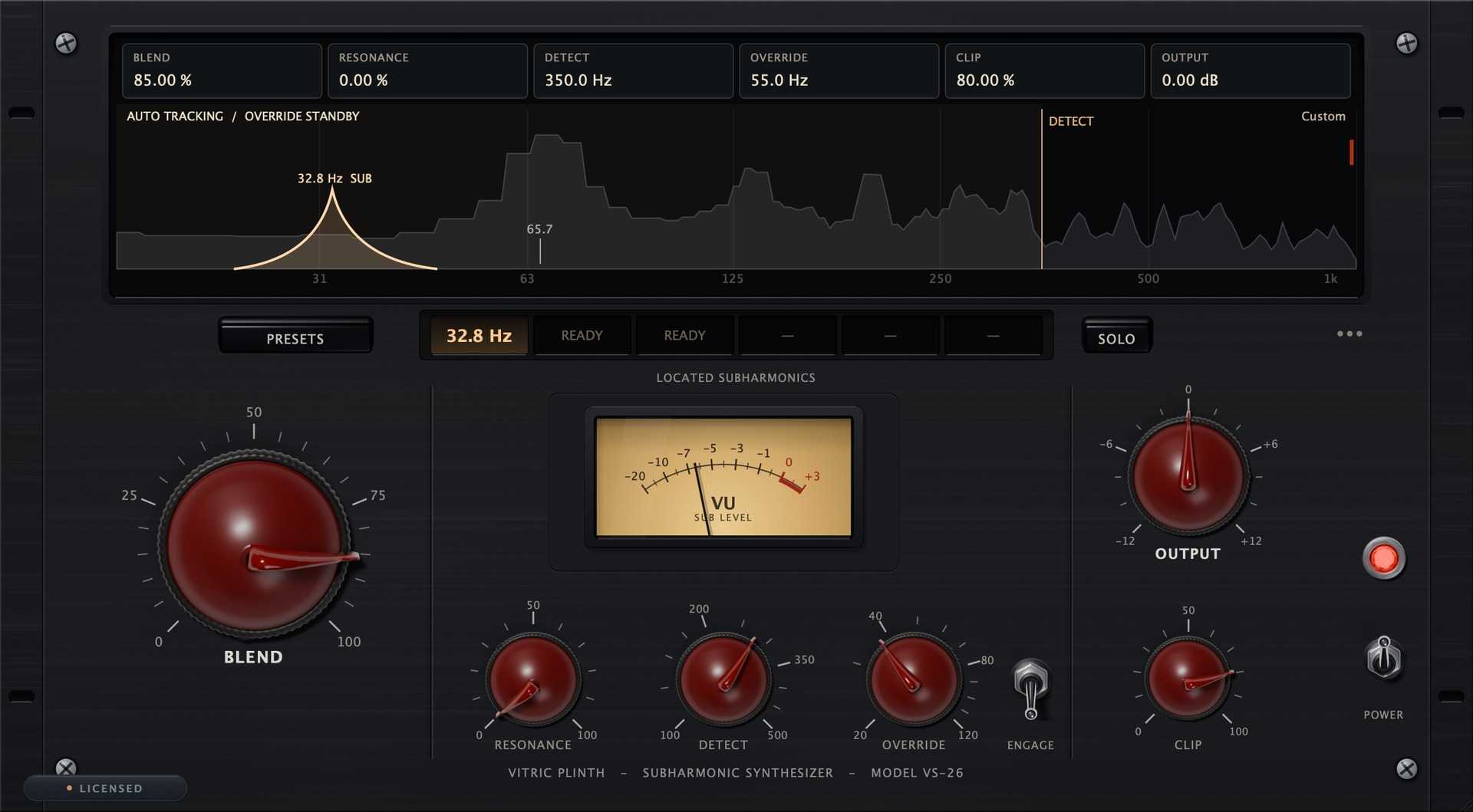
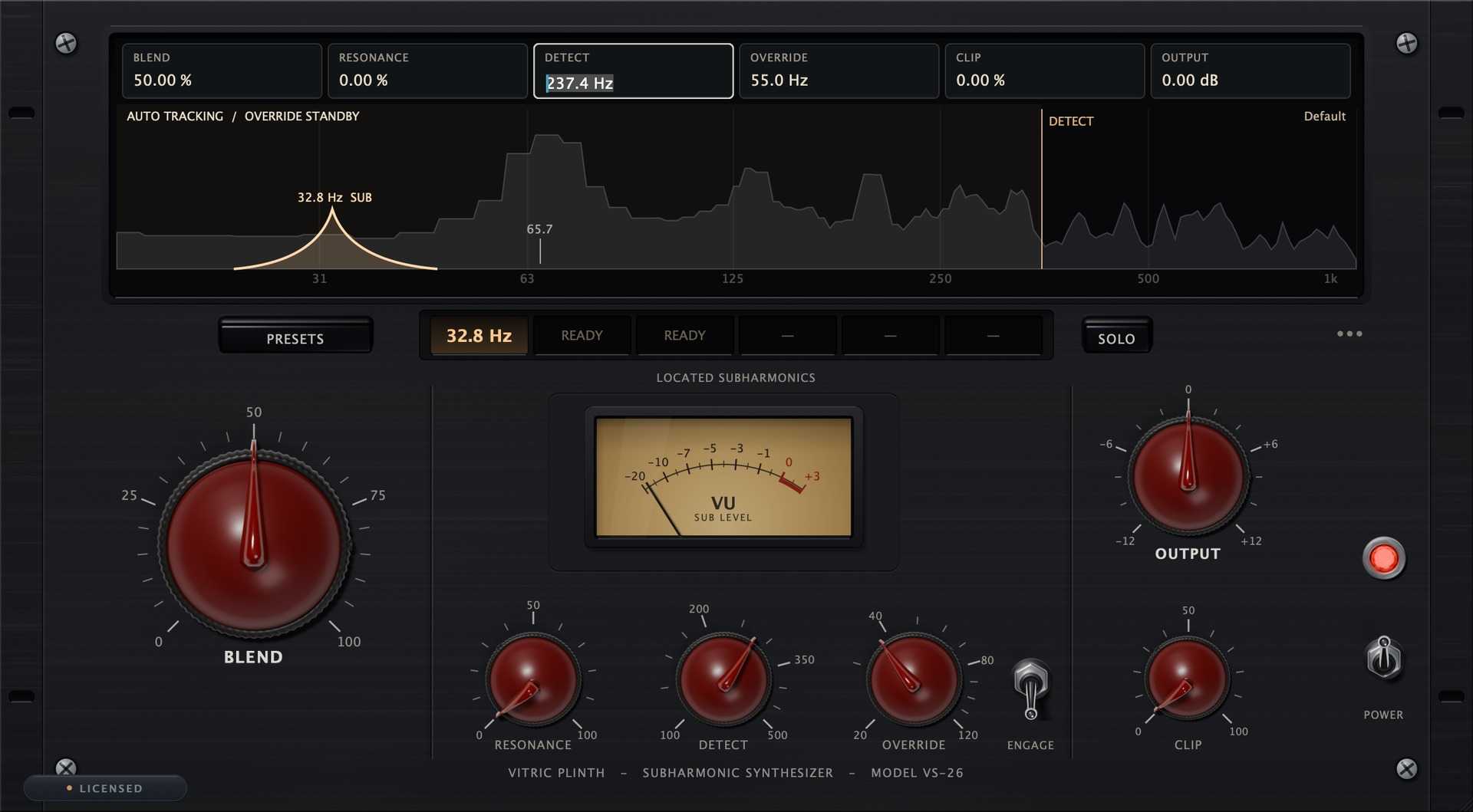
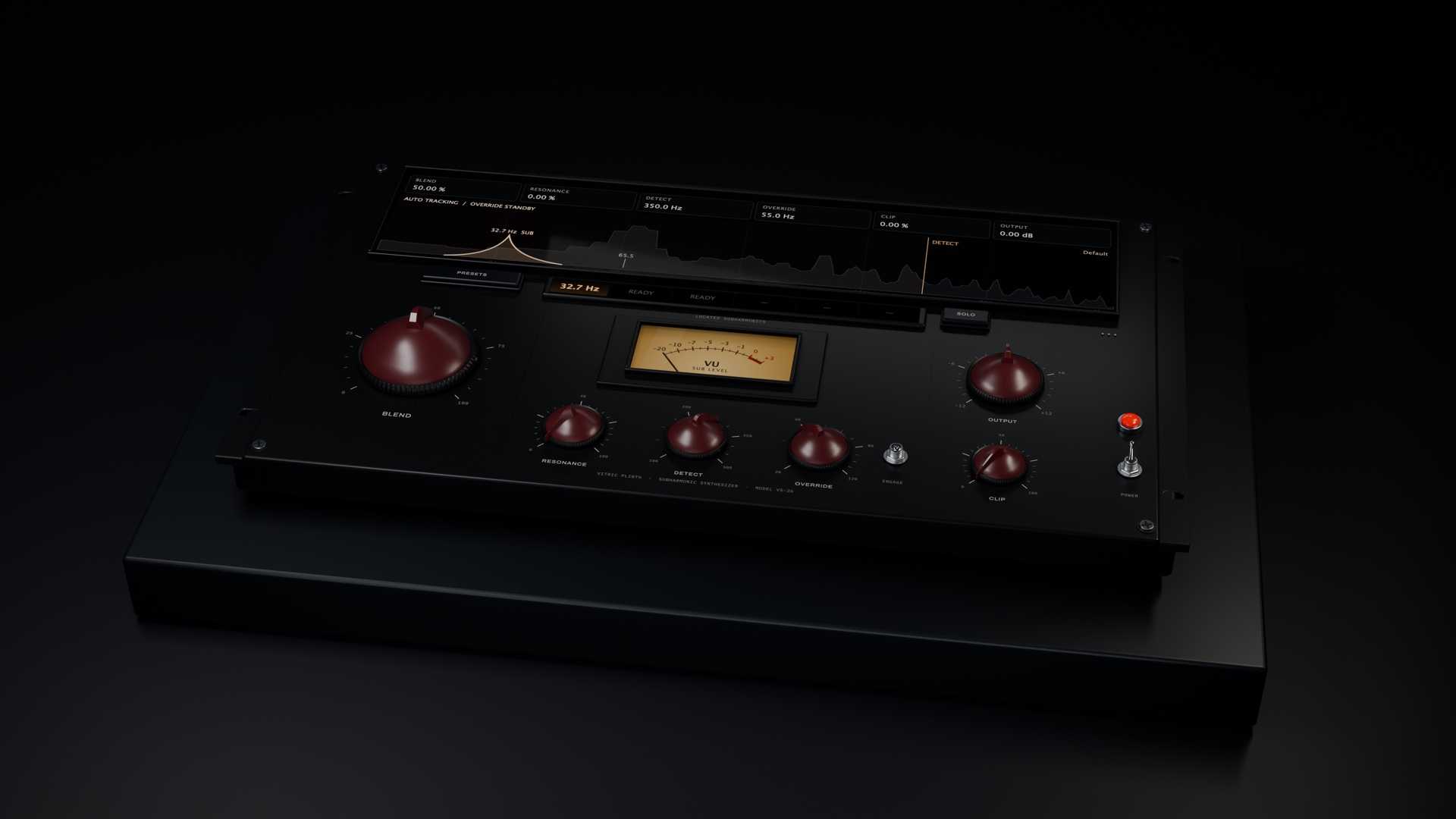
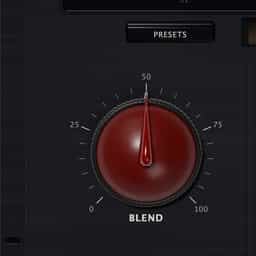
A subharmonic generator that is roughly in time with the source adds a beat against it, and one that guesses on noise adds a burble. Plinth does neither, and shows you that it does neither. Drift of the generated sub against an 80 Hz reference measures plus or minus 0.000 degrees over 60 seconds, against a bar of 5 degrees; when locked, correction is bounded at 10 degrees per cycle, so re-locks are inaudible. On pink noise the sub bus renders exact digital silence. On the octave-trap battery, a strong second harmonic over a weak fundamental, it produced zero flips. The screen is the input spectrum. The bright line is the DETECT crossover, engraved 100 to 500 Hz and starting at 350: drag it, or turn the knob, to set the region Plinth hunts in. Markers show the located fundamentals and the brightest curve is the sub being generated right now, labeled with its own frequency. The LOCATED SUBHARMONICS row reads out what the detector found: a locked slot shows its frequency in Hz, READY marks a live generator slot and a dash marks a reserved one. Three generators run at once across six slots, each with its own mute. Six exact values sit along the top of the screen and follow the controls and the host; click one to type a percentage, a frequency or a dB value. BLEND is the instrument: it sums the generated sub into your untouched dry signal, and all the way up the sub sits at level with the dry low band by volume. RESONANCE is a tuned bloom riding the generated fundamental; past half dial, gentle upper partials join it for small-speaker reach, supporting the fundamental rather than replacing it. OVERRIDE with its ENGAGE toggle pins the tracker to a chosen fundamental from 20 to 120 Hz for material that hunts. CLIP is an optional first-order ADAA soft clip on the summed output, measuring a worst non-harmonic spur of minus 104 dBFS on a clipped 35 Hz sine at full clip. OUTPUT trims plus or minus 12 dB. SOLO hears only what Plinth added, at its blended level, and POWER is a click-free true bypass. Reported latency is 0 samples, always, the clip stage included. When a new note starts the sub fades in over the first confident cycles, about 7 cycles to 90 percent: that is the physics of identifying a 40 Hz fundamental, not plugin delay, and nothing is time-shifted. The sub bus is mono and dead center, so decorrelated stereo program yields bit-identical left and right contributions. 32 factory starting points sit under PRESETS, tagged by source. The whole engine costs 0.33 percent of one core at 48 kHz and a 128-sample block. Plinth Subharmonic Synthesizer generates one octave down. The second octave is deliberately not in this version, and there is no compressor, ducker or auto-makeup anywhere in the signal path. Built and used at a working recording studio.
Not enough reviews yet