Audio Imperia Nucleus and Solo for MuseScore Studio
Audio Imperia makes the “ready to go” orchestral libraries that professional composers reach for when a trailer or a cue is due tomorrow. Two of them — Nucleus, a complete epic orchestra, and Solo, a set of lyrical solo instruments — are on MuseHub as MuseSounds Editions, which means they play back inside MuseScore Studio from the notation alone: no key switches, no MIDI controller, no setup.
This piece covers what each library contains, what kind of writing each suits, how the two complement each other, and which Audio Imperia titles are included in MuseSounds Pro.
Nucleus, Solo and MuseSounds Pro
Who Audio Imperia are
Audio Imperia is a transatlantic team spread across the US and the UK, and first of all a team of working composers. That matters for the design: the libraries are built around what a composer on a deadline needs — a cohesive orchestral sound out of the box — rather than around exhaustive sampling for its own sake. They have released consistently high-quality libraries since their founding, and the MuseSounds Editions bring two of the best known to notation.
A MuseSounds Edition is a version of a library rebuilt for MuseScore Studio’s playback engine. You use MuseScore Studio as you normally would, press play, and the engine chooses articulations and dynamics from what you wrote. How to use MuseSounds in MuseScore Studio covers the mechanics.
Nucleus

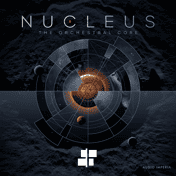
Nucleus is a full epic orchestra in one library: 48 instruments spanning strings, brass, woodwinds, percussion and choir, plus sound-design patches for layering modern textures under the acoustic ensemble.
If you want the sound of Hollywood scores, trailers, advertising and high-budget television — big unison strings, low brass with weight, thunderous percussion — Nucleus is the launchpad. Because everything was recorded to sit together, a first orchestration already sounds balanced, which is exactly what a mock-up needs before anyone has heard the piece played.
Solo

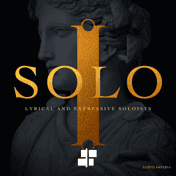
Solo is the near-opposite of Nucleus: the intimacy and expression of individual players. The roster:
- Strings — violin, viola, cello
- Brass — trumpet, French horn, descant horn
- Winds — flute, clarinet, oboe, English horn, bassoon
- Voice — soprano, angelic and operatic
Each instrument was sampled for a slow, lyrical, expressive legato. Notes bloom, vibrato develops, dynamics shift the way a live player’s do. Solo is at its best on slow-moving melodic lines; the violin is not built for Paganini-speed virtuosity, and that deliberate focus is what makes the simple phrases sound so convincing. Demos are on the product page.
Nucleus and Solo together
The two complement each other precisely because they are opposites. Nucleus provides the grandeur and cohesion of a full ensemble; Solo adds the individual voice on top — a solo cello over the string bed, a horn call before the tutti. Used together, with attention to orchestration, they produce mock-ups that are convincing enough to share with a director or a client.
The rest of the Audio Imperia range on MuseHub
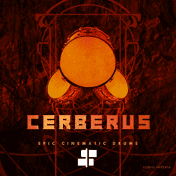
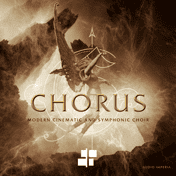
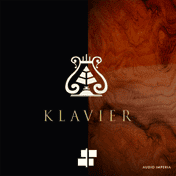
Since these two launched, Audio Imperia has added three more MuseSounds Editions: Cerberus (cinematic drums), Chorus (cinematic choir) and Klavier (hybrid pianos). All five are sold individually.
MuseSounds Pro — the subscription that adds premium libraries to the free MuseSounds collection for $19.99 a month or $199.99 a year — includes Nucleus and Solo. Cerberus, Chorus and Klavier are not in Pro and are bought separately. Check the product pages for the current list, which grows.

FAQ
Next steps
For the wider field, the best orchestral libraries and the best choir libraries put Audio Imperia next to the alternatives, and Vienna Symphonic Library on MuseHub covers the other big partner in Pro. For the whole picture — what MuseSounds are, what is free and what Pro includes — read what are MuseSounds? first. Browse MuseSounds on MuseHub, or download MuseHub free and start with the free collection.