Best orchestral VSTs in 2026 (free and paid)
A full orchestra used to mean a scoring stage, a hundred players and a budget to match. Sample libraries put that same sound on your desk: strings, brass, woodwinds and percussion recorded by real players, ready to write with. The catch is that “orchestral VST” covers everything from an affordable all-in-one core to a deep flagship library that fills a hard drive — and one of the strongest options is completely free. Here are the best orchestral VSTs in 2026, split by what each does and what it costs, so you can start a score today without guessing.
“Orchestral VST” means three very different buys: an all-in-one core, individual section libraries, and deep flagship libraries. This roundup covers all three, folds in harp, and flags what’s free at every step.
Orchestral libraries on MuseHub

Top picks at a glance:
- Best all-in-one core to start with: Audio Imperia Nucleus, the whole orchestra under one roof.
- Best complete orchestra for free: the Muse-branded set (Muse Strings, Muse Brass, Muse Woodwinds and Muse Percussion), free in MuseScore Studio.
- Best strings to go deep: Berlin Strings (Orchestral Tools); Spitfire BBC Symphony Orchestra and VSL Synchron for the biggest paid rigs.
- Best free flagship in a DAW: Spitfire BBCSO Discover.
- Best harp: Muse Harp (free) or Berlin Harps for extra color.
How we choose: we rank on sound, realism and value, weighing free and paid on merit, not by brand, and we say plainly which tools run in a DAW and which run in MuseScore Studio.
What to look for in an orchestral VST
If you’re short on time: the best orchestral VSTs range from all-in-one cores like Audio Imperia Nucleus to deep flagship libraries from Spitfire, EastWest and VSL; for a complete pro-grade orchestra for free, the Muse-branded MuseSounds play in MuseScore Studio via MuseHub. Which one is right depends less on brand than on where you are in the buying ladder below.
A VST (Virtual Studio Technology, the plugin format that loads instruments and effects inside your music software) that plays orchestral sounds is almost always a sample library: recordings of real players, captured note by note, that you trigger from a keyboard or a score. What separates a convincing library from a toy is its articulations — the different ways a player attacks a note (a smooth legato, a short staccato, a swelling crescendo), because a real orchestra never plays one flat sound. Deeper libraries give you more of them, plus multiple dynamic layers (soft to loud, recorded separately).
The bigger decision is how much orchestra you buy at once, and there are three routes:
- An all-in-one core. One library covering every section (strings, brass, woodwinds, percussion) at a usable depth. It’s the fastest way to write a full arrangement, costs less than buying piecemeal, and needs little tweaking to sound right. Most people should start here.
- Individual section libraries. A dedicated strings library, a dedicated brass library, and so on. Reach for these when you want real depth in one section (more articulations, more control), or you’re learning to orchestrate.
- Deep flagship libraries. The large, expensive rigs (multiple mic positions, huge articulation lists) professional composers layer for a hero cue. Overkill until you know you need them.
One honest note on format. The famous DAW libraries (Spitfire, EastWest, Vienna Symphonic Library, Native Instruments) load as plugins, often inside Native Instruments’ Kontakt, in a DAW like Logic or Ableton. The orchestral libraries on MuseHub, both the free Muse-branded set and paid partner titles, are voiced for MuseScore Studio, the free notation software, and install through the free MuseHub app. If you write in notation, that’s a feature: studio-recorded sound, one-click install, nothing to configure.
The best orchestral VSTs in 2026
1. Spitfire BBC Symphony Orchestra
The BBC Symphony Orchestra is the benchmark most composers measure a full orchestra against, recorded with the actual BBC players at Maida Vale Studios. Its strength is completeness and consistency: every section captured in the same room with the same mics, so the whole orchestra sits together without fighting. The full version is a serious paid investment and a large install, but Spitfire also gives away BBCSO Discover, a free, roughly 240 MB slice that runs in their own plugin. It’s the reference point for a DAW-based orchestra, and Discover is the easiest paid-quality way to start if you work in a DAW.
2. Audio Imperia Nucleus

Nucleus is the all-in-one core to start with, and the reason is scope: strings, brass, woodwinds, percussion and choirs under one roof, voiced to sound cinematic with minimal fuss. Instead of assembling four separate libraries and balancing them yourself, you load one instrument and write. That “sounds right out of the box” quality is exactly what a beginner or a fast-moving producer needs, so your time goes on the music, not on mixing sections against each other. It costs a small fraction of a flagship rig, which makes it the sensible first orchestral purchase before you decide which section to deepen.
3. Muse Strings

Strings are the heart of an orchestra, and Muse Strings gives you a full section: a rich symphonic ensemble plus an intimate string quartet, performed by session players and recorded cleanly. What makes it stand out is that it’s free and pro-grade, with expressive legato and a usable set of articulations, without the cost that usually gates a good string library. It plays in MuseScore Studio, so it suits anyone writing in notation who wants the section that carries most of a score’s emotion. Start here for strings, and add a deeper library only if you hit its limits.
4. Berlin Strings


When you outgrow a free section and want more realism, Berlin Strings is the step up. It’s Orchestral Tools’ gold-standard strings: five sections recorded by top London session players, with a deep articulation list and real dynamic range, now in the MuseSounds format for MuseScore Studio. The extra depth lets a string line breathe and sound performed rather than programmed, which matters most on an exposed melody. It’s the deep-strings upgrade for the section you lean on hardest, without a flagship’s price.
5. EastWest Hollywood Orchestra Opus
Hollywood Orchestra Opus is one of the deep flagships professional composers reach for, built for the big, polished cinematic sound. It’s a complete orchestra with multiple mic positions (close, room and surround perspectives you blend to place it in a space), which is where much of its realism comes from. It’s paid, available outright or through EastWest’s subscription, so you can rent access rather than buy in one go. Reach for it when you want a large, film-ready orchestra and have the disk and CPU to run it in a DAW.
6. Muse Brass

Muse Brass is the free brass section that pairs with Muse Strings, covering solo instruments and ensembles from soft pianissimos to a thundering fortissimo. Brass gives an orchestra its power and its fanfare, and the standout here is dynamic range: multiple recorded layers and true legato let a horn line swell convincingly instead of just getting louder. It plays in MuseScore Studio, and it’s the section that adds weight and heroism to a cue. It’s free, and enough for most arrangements before you consider a specialist brass library.
7. Muse Woodwinds

Woodwinds are the orchestra’s coloring: the flute, oboe, clarinet and bassoon lines that add air and character between the strings and brass. Muse Woodwinds is a free collection of solo woodwinds recorded in detail by session players, which matters because woodwinds are exposed. You hear every imperfection, so recording quality counts more than quantity. It plays in MuseScore Studio and rounds out the winds without cost, so an arrangement isn’t stuck on strings and brass alone.
8. Muse Percussion

Muse Percussion is a free orchestral percussion toolkit spanning pitched and unpitched instruments, from delicate glockenspiel and xylophone up to booming taikos and tam-tams. Percussion gives a score its rhythm and impact, and the breadth is the point: one library covers both the sparkle on top and the low-end hits that punctuate a cinematic moment. It plays in MuseScore Studio, the free way to add drive and accent to an orchestral piece. To build the rhythm out further, see the best percussion VSTs.
9. Vienna Symphonic Library Synchron
Vienna Symphonic Library is the deepest end of orchestral sampling, and the Synchron series is its modern flagship. Its libraries capture an unusually long list of articulations and playing techniques, recorded on a dedicated scoring stage, giving fine control over how each note is played. That depth is also its cost: it’s expensive, large, and has a real learning curve, aimed at composers who need maximum realism in a DAW rather than a fast start. It’s the reference for detail when a project justifies it.
Adding a harp to your orchestra
The harp is the section people forget until a score feels like it’s missing something: a glissando, a shimmer, a gentle arpeggio under the strings. It doesn’t need a big standalone library, so it’s worth adding cheaply. Both picks play in MuseScore Studio via MuseHub.

Muse Harp is a free concert harp with the articulations that actually make a harp sound like a harp: plucked sustains, staccatos, glissandi, harmonics and bisbigliando (a soft tremolo). It’s tuned to sit inside the full orchestra rather than stand alone, so it blends under strings and winds without extra work. For most scores it’s all the harp you need, at no cost.

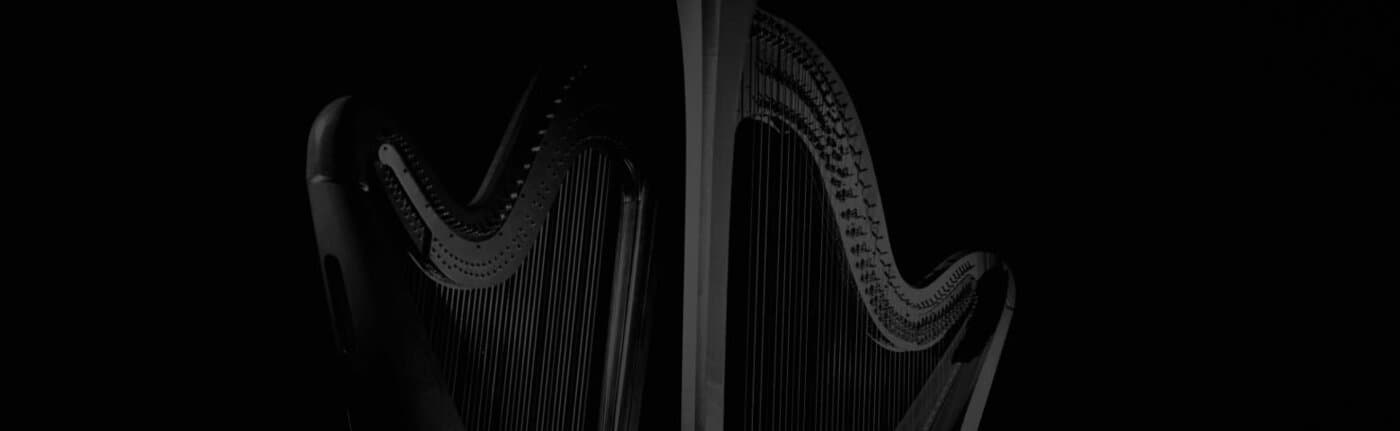
Berlin Harps is the paid step up: two harps recorded at the Teldex Scoring Stage, from Orchestral Tools’ Berlin series, for extra texture and color when the harp is more than a background touch. It’s an inexpensive way to add a richer, more detailed harp to a template already using the Berlin sound.
Best free orchestral VST
You can score a full piece without spending anything. The Muse-branded set (Muse Strings, Muse Brass, Muse Woodwinds, Muse Percussion and Muse Harp) is a complete, pro-grade orchestra recorded by session players, free in MuseScore Studio through the MuseHub app. That’s the honest headline of the category: the barrier to writing orchestral music is now essentially zero if you work in notation. If you’re in a DAW instead, Spitfire’s BBCSO Discover is the free flagship slice to start with, and there are more no-cost picks in our best free VST instruments roundup. “Free” here means price, not quality.
How to choose
Work the ladder from the top. If you’re starting out, get an all-in-one core (Nucleus, or the free Muse-branded orchestra in MuseScore Studio) and finish a few pieces before buying anything else. Then deepen the one section you lean on most: for most writers that’s strings, where Berlin Strings adds the realism a free section can’t, and our best strings VSTs guide goes deeper. Reach for a deep flagship (BBCSO, Hollywood Orchestra Opus, VSL Synchron) only for a hero part that needs it, and only in a DAW with the CPU and disk to spare. Add a harp last, cheaply. Most composers end up with a core plus one or two strong sections — not everything at once. Writing for voices too? See the best choir VSTs.
Comparison table
| Pick | Type | Price | Best for |
|---|---|---|---|
| Spitfire BBC Symphony Orchestra | Deep flagship (full orchestra) | Paid (Discover free) | The DAW benchmark; free Discover to start |
| Audio Imperia Nucleus | All-in-one core | $79.99 | The fastest full-orchestra starting point |
| Muse Strings | Strings section | Free | A pro-grade string section at no cost |
| Berlin Strings | Strings section (flagship) | $49.99 | Deepening the strings you rely on most |
| EastWest Hollywood Orchestra Opus | Deep flagship (full orchestra) | Paid / subscription | Big, film-ready cinematic scoring in a DAW |
| Muse Brass | Brass section | Free | Free power and fanfare for arrangements |
| Muse Woodwinds | Woodwinds section | Free | Free woodwind color and detail |
| Muse Percussion | Percussion section | Free | Free orchestral rhythm and impact |
| Vienna Symphonic Library Synchron | Deep flagship (detail) | Paid | Maximum articulations and control in a DAW |
| Muse Harp | Harp | Free | A blended concert harp at no cost |
| Berlin Harps | Harp | $19.99 | Extra harp color for a Berlin template |
FAQ
What is the best orchestral VST? There’s no single winner, because it depends on your budget and where you write. For a paid DAW flagship, Spitfire BBC Symphony Orchestra is the common benchmark; for an all-in-one core that gets you writing fast, Audio Imperia Nucleus covers the whole orchestra ($79.99); and for a complete orchestra at no cost, the Muse-branded set (Muse Strings, Brass, Woodwinds, Percussion) is pro-grade and free in MuseScore Studio.
What is the best free orchestral VST? Two honest answers for two setups. In notation, the Muse-branded orchestra (Muse Strings, Muse Brass, Muse Woodwinds, Muse Percussion and Muse Harp) is a complete, session-recorded orchestra, free in MuseScore Studio via MuseHub. In a DAW, Spitfire’s BBCSO Discover is a free, roughly 240 MB slice of a flagship library that runs in its own plugin.
Do I need a full orchestral library or separate strings, brass and woodwinds? Start with one all-in-one core, like Nucleus or the free Muse orchestra, because it covers every section and is cheaper and faster than buying piecemeal. Move to individual section libraries only when you want real depth in a specific section, most often strings, or you’re learning to orchestrate one section at a time.
Can I make orchestral music for free? Yes. A complete free orchestra (strings, brass, woodwinds, percussion and harp) is the Muse-branded MuseSounds in MuseScore Studio, installed through the free MuseHub app. The one requirement is writing in MuseScore Studio rather than a DAW, which for notation-based composers is a clean, no-cost way to work.
Next steps
Every MuseSounds pick here plays back inside MuseScore Studio — how to use MuseSounds in MuseScore Studio covers the setup in five steps. For two of the partner libraries in depth, see Vienna Symphonic Library on MuseHub and Audio Imperia Nucleus and Solo.
- Deepening your string section? Read the best strings VSTs.
- Building out rhythm and impact? See the best percussion VSTs.
- Scoring on a budget? Browse the best free VST instruments.
- Explore the full orchestra in the MuseSounds catalog.
The free Muse orchestra, Nucleus, Berlin Strings, Berlin Harps and hundreds more instruments install in one click. Download MuseHub free and start scoring in MuseScore Studio today.